
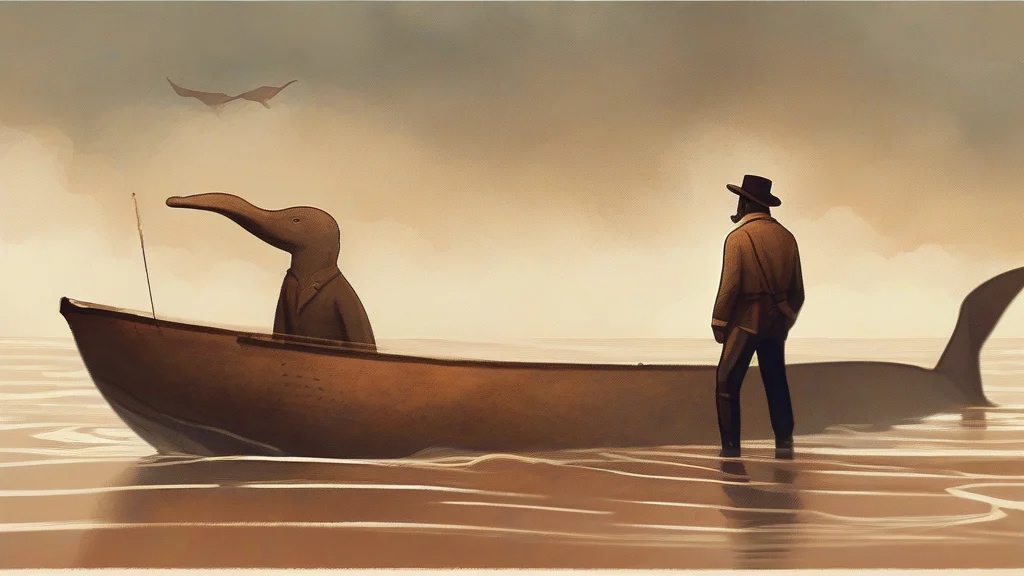
What does whaleman mean?
A whaleman is a man engaged in whaling, the historical industry of hunting whales for their oil and other products. In older English, especially in nautical writing, the term referred to members of a whaling crew and more broadly to people whose work was catching whales. Unlike the modern vessel-focused word whaler, whaleman unambiguously denotes a person. Its principal sense is historical, and present use is mainly literary, nostalgic, or deliberately archaic; a writer might use it to evoke the hardship, danger, and global reach of the old whale fishery. The regular plural is whalemen. The compound joins whale with man and reflects the vocabulary of English seafarers who organized their work around the pursuit of whales. Although the word may sound quaint today, it provides a precise way to distinguish an individual participant in whaling from the ships, tools, and profits associated with the trade. It is consequently useful in historical prose and in descriptions of seafaring life before petroleum greatly reduced the industrial importance of whale oil.
nounA man employed in the whale fishery or engaged in hunting whales; a whaler. The term is chiefly historical or literary.
- A man engaged in the whale fishery, especially a member of a whaling crew or a hunter of whales.
"The whaleman raised his harpoon as the whale broke the surface."
"The whaleman coiled the rope and waited for the captain's signal."
"In his account of the voyage, the author remembered the whaleman as a patient teacher."
The regular plural is whalemen, often used collectively for the crews of whaling vessels.
"The whalemen returned to port as dawn broke over the bay."
With a harpoon in hand, a whaleman could turn one sighting on the horizon into months of dangerous work.
Reviewed by Deb Chak, Editor. AI-assisted content curated by RJS Tech Solutions LLP.
Etymology of whaleman
Whaleman is an English compound of whale and man. Whale descends from Old English hwæl, while man descends from Old English mann; the compound appears in English maritime usage by the early modern period and is now chiefly literary or dated. Related English formations such as whalery, whaleboat, and whalebone share the same whale element.
Related word forms
How whaleman is actually used
Chiefly historical and literary. It often appears in narratives describing the old whaling industry and may sound quaint or deliberately archaic in modern usage.
Easily confused with whaleman
A whaleman is a person who participated in whaling, whereas a whaler can refer either to such a person or, more commonly today, to a whaling ship.