
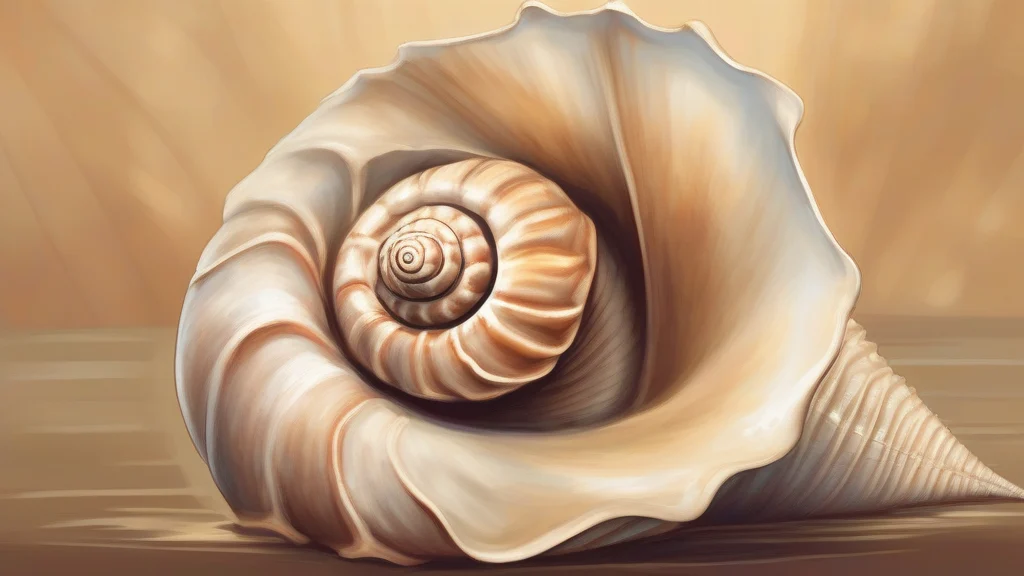
What does whelk mean?
A whelk is a large sea snail, a marine gastropod mollusc with a substantial spiral shell. In culinary contexts, the word usually refers to edible whelks, which are gathered along rocky coasts and prepared in regional dishes. A whelk can also mean the mollusc’s shell; such shells were historically used as simple horns, giving the word a distinctive association with sound-making as well as with the seashore. The related verb whelk is now archaic and means to swell, rise, or bulge, especially like a liquid. Although it is not a common everyday word, whelk appears in coastal dialects, fishing terminology, historical texts, and discussions of marine molluscs. Knowing it can help distinguish a particular large edible sea snail from the many smaller marine snails encountered on beaches.
A large marine gastropod mollusc with a spiral shell, especially one of the edible whelks; by extension, the shell of such a mollusc.
"They boiled whelks and served them with lemon and brown bread."
The edible sense is especially relevant in British and Irish culinary and coastal contexts, though the word is also used in American English.
To swell, rise, or bulge, especially as a liquid.
"The tide whelked slowly against the harbor wall."
This verb is archaic and literary rather than part of standard modern everyday usage.
The regular plural of the noun is whelks; one whelk is a single mollusc.
"The market sells baskets of whelks and other fresh shellfish."
A whelk’s shell can be made into a simple horn, giving this sea snail an unexpectedly musical past.
Reviewed by Deb Chak, Editor. AI-assisted content curated by RJS Tech Solutions LLP.
Where does whelk come from?
The word appears in Middle English as a form of whelke and continues the Old English term whelc, used for a marine snail or its shell. Its ultimate source is Germanic, although the precise development of the word and its relationship to forms in other Germanic languages is less certain than its Middle and Old English continuity. The noun’s older association with the shell also explains its historical use in referring to shell-made horns.
How whelk is actually used
Whelk is uncommon in everyday modern English but is familiar in discussions of coastal wildlife, fishing, and traditional food. The verb sense is archaic and literary.