
What does whimsy mean?
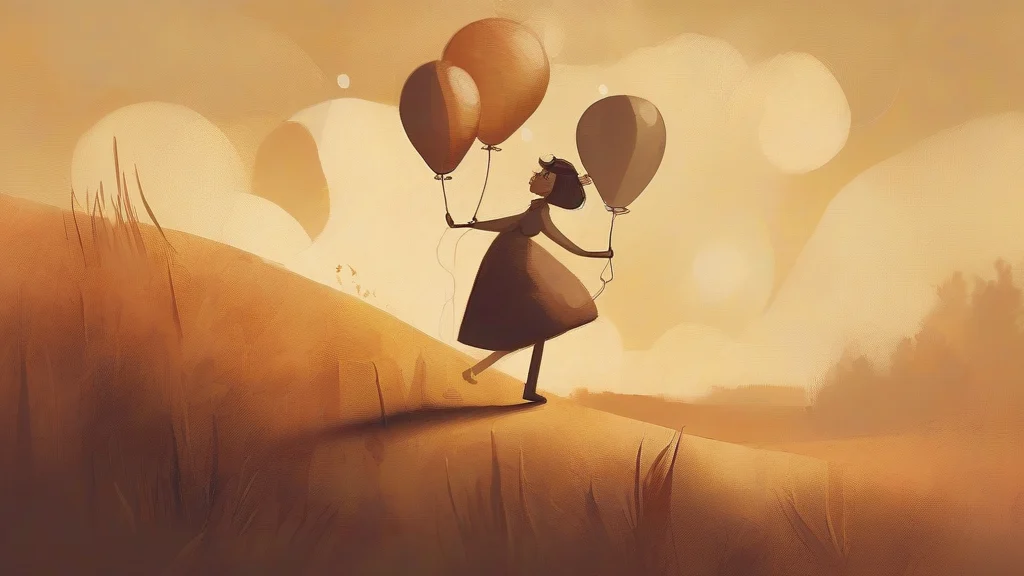
Whimsy describes the playful unpredictability, imaginative charm, or gentle eccentricity found in language, art, design, storytelling, and behavior. It often implies a sense of delight rather than disorder, presenting the world with imaginative energy and an appetite for the unexpected. Writers use it to characterize a story's invented world, a creator's fanciful style, or a child's imaginative play. In its less common sense, whimsy can mean an eccentric notion or passing fancy. The word is usually positive, though it may be used ironically when something appears excessively cute, impractical, or lacking seriousness. It is especially effective when an otherwise ordinary subject is given freshness through surprise, invention, or humor. Closely related forms such as whimsical and whimsically are often more convenient when the idea must serve as an adjective or adverb.
nounWhimsy is a playful, fanciful quality of thought, expression, or behavior. It can also refer to a fanciful notion or caprice.
- Playful, fanciful charm or imagination, especially in expression, design, or behavior.
- A fanciful or capricious idea; a whim.
"The old house was filled with charm and whimsy, with crooked staircases and unexpected painted doors."
"A little whimsy turns an ordinary garden into a place of quiet surprises."
"The novel is remembered less for its plot than for the whimsy of its invented world."
The plural is uncommon; whimsy is usually used as a mass noun.
"The exhibition presented a succession of small whimsies in glass and painted wood."
Whimsy is the art of making the unexpected feel perfectly at home.
Reviewed by Deb Chak, Editor. AI-assisted content curated by RJS Tech Solutions LLP.
Where does whimsy come from?
Whimsy is an early 17th-century English word of uncertain origin. Its development is closely associated with the adjective whimsical, while accounts connecting it to a particular dialect, person, or place remain disputed. Because its precise derivation is unresolved, no group of securely established cognates can be given with confidence.
Related word forms
How whimsy is actually used
Whimsy is chiefly literary and usually positive, suggesting imaginative, playful, or delightfully eccentric qualities. It can also be used ironically to characterize something as overly cute or impractical. The closely related adjective is more common in everyday description: whimsical scenery, a whimsical idea, or a whimsical sense of humor.
Easily confused with whimsy
A whim is a sudden passing impulse to do something, whereas whimsy is a broader fanciful quality, idea, or manner of expression.