What does wimpling mean?
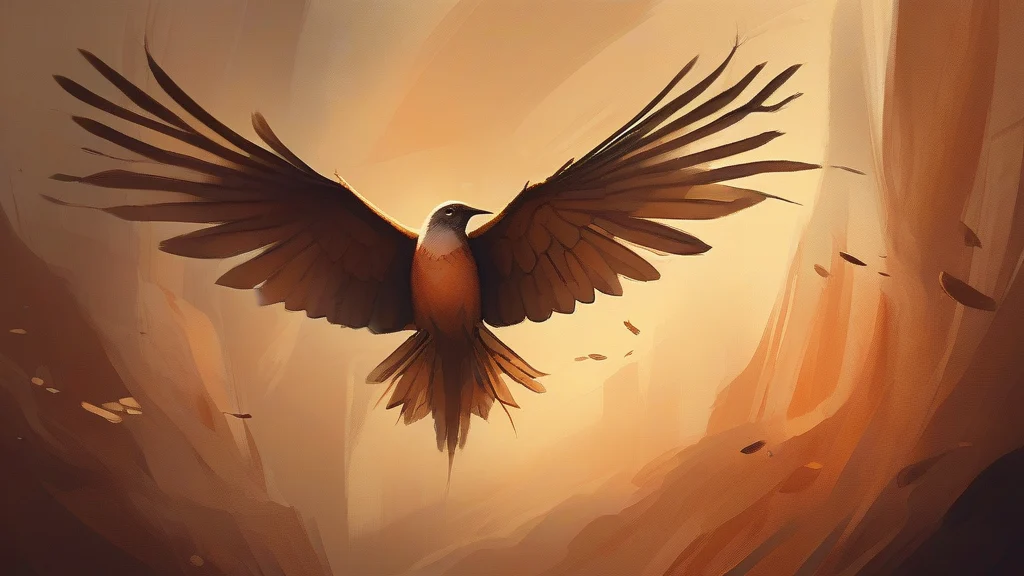
Wimpling is a verb that means to flutter or quiver, especially with a rapid, light motion, like the wings of a bird in flight. It is often used in poetic or descriptive language to convey a sense of lightness and movement. The word is derived from the Old English word 'limp', which means 'to limp' or 'to move with a limp'. Wimpling is typically used to describe the movement of birds in flight, but it can also be used to describe other objects or situations that exhibit a similar motion. In general, wimpling is a useful word for describing things that are light, airy, and full of movement.
verbTo flutter or quiver, especially with a rapid, light motion, like the wings of a bird in flight.
- To flutter or quiver, especially with a rapid, light motion, like the wings of a bird in flight.
"The bird's wings wimpling in the wind created a mesmerizing display of aerodynamics."
"The bird's wings wimpling in the wind created a mesmerizing display of aerodynamics."
"The delicate petals of the flower wimpling in the breeze."
Wimplings is the standard plural form of wimpling, and it is used to describe multiple instances of the verb.
"The wimplings of the bird's wings created a beautiful display of aerodynamics."
Reviewed by Deb Chak, Editor. AI-assisted content curated by RJS Tech Solutions LLP.
Etymology of wimpling
The word wimpling is derived from the Old English word 'limp', which means 'to limp' or 'to move with a limp'. This word is thought to be related to the Proto-Germanic word '*limiz', which is also the source of the Modern German word 'limpen', meaning 'to limp'. The word wimpling has been used in English since the 15th century, and it has been used to describe the movement of birds in flight since at least the 17th century.
How wimpling is actually used
Wimpling is often used in poetic or descriptive language to convey a sense of lightness and movement.