
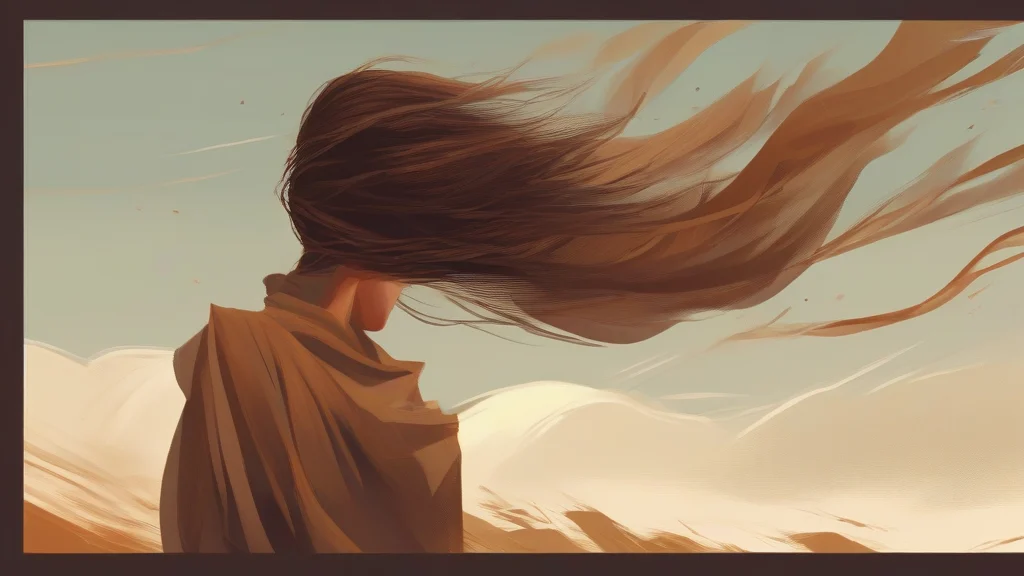
What does windblown mean?
Windblown is an adjective meaning blown, carried, or scattered by the wind. It can describe human features such as hair, natural features such as grass or trees, and loose material such as sand or leaves. The word has a literary, often poetic tone: it evokes open, exposed landscapes and the visible movement of air, making it more specific than windy and more compact than windswept. In a sentence such as “Her hair was windblown across her face,” the compound emphasizes the result of a force acting on something rather than merely the presence of wind. It is especially useful in descriptive writing, where it condenses a physical scene or sensation into a precise image. Although used in British and American English, it sounds more marked in literary prose than in casual conversation. Its transparent construction also allows it to convey exposure, movement, and the untidy effects of wind in a single word.
adjectiveBlown, carried, or scattered by the wind. It often describes vegetation, hair, terrain, or other things exposed to moving air.
- Blown, carried, or scattered by the wind.
- Exposed to the wind and often stripped of covering vegetation, as with a tree, hedge, or landscape.
"Her windblown hair framed her face as she crossed the exposed hillside."
"Windblown leaves covered the narrow country lane."
"The windblown trees stood bare against the grey sea."
One word makes an entire landscape move: windblown.
Reviewed by Deb Chak, Editor. AI-assisted content curated by RJS Tech Solutions LLP.
Etymology of windblown
Windblown is a transparent English compound formed from wind and blown, the past participle of blow. The construction joins the source of the force with the participle describing its result. It has become especially associated with literary descriptions of exposed places, vegetation, and hair affected by moving air.
How windblown is actually used
Chiefly literary and descriptive, with a picturesque or windswept atmosphere. It occurs more often in formal writing and creative description than in everyday speech.