
What does wold mean?
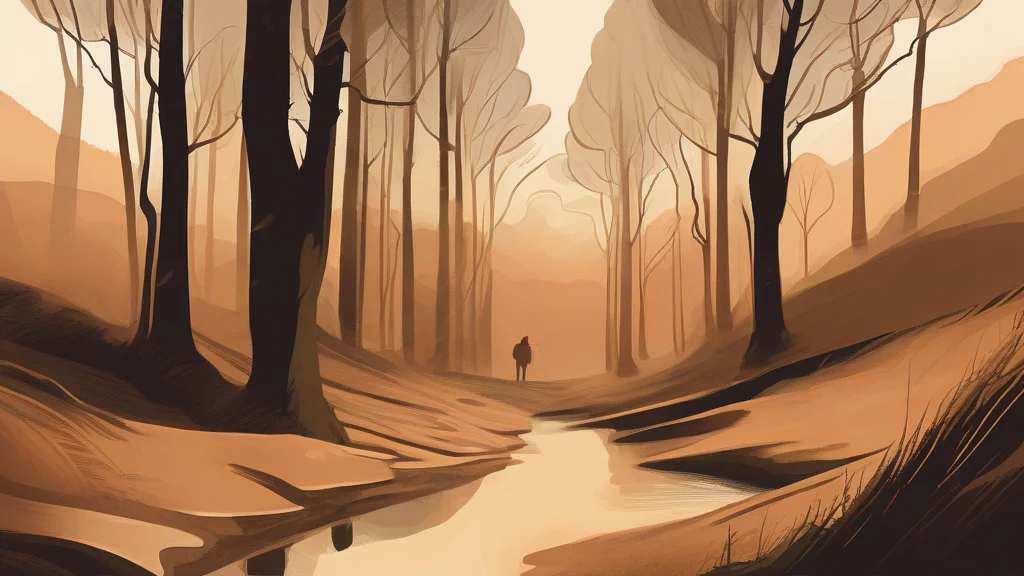
Wold is chiefly a British topographical noun denoting a hill, a ridge, or an area of open rolling upland. Its strongest modern associations are with the named downland regions of England, especially the Yorkshire Wolds and the South Wolds, where “Wolds” is usually a plural collective. In literary or older descriptive writing, a singular “a wold” can refer to one elevated, often treeless stretch of country, although the word is much less neutral than the ordinary “hill” and can suggest exposed, windswept, spacious terrain. The word is also encountered as an obsolete auxiliary verb, “wold,” equivalent in some contexts to “would,” but this form is confined to archaic and dialectal writing. A useful way to remember “wold” is through its historical connection with woodland: it comes from an Old English term for forest or wooded country, although the surviving noun usually denotes open hills rather than trees. The spelling is easily mistaken for “world,” but the meanings are unrelated in ordinary modern usage.
A hill or elevated area of open country, especially in Britain; often used collectively in the plural for a range or region of hills.
"Sheep grazed on the exposed slopes of the wold."
Literary and topographical in general prose, but standard in established British geographical names.
An obsolete form of will, typically equivalent to would and used to express a conditional or hypothetical action.
"She wold have returned had anyone given her reason to stay."
Obsolete; restricted to archaic, historical, or dialectal contexts.
The plural is especially common in the names of ranges or regions of upland and may be treated as a collective proper noun.
"The Yorkshire Wolds are known for their chalk grassland and rolling hills."
The word that means "hill" began life as "wooded hill" and now survives mainly in place names.
Reviewed by Deb Chak, Editor. AI-assisted content curated by RJS Tech Solutions LLP.
Where does wold come from?
Wold descends from Old English wald, meaning “forest” or “wooded hill,” a term reflected in cognates such as Old Saxon wald and Old High German walt. By Middle English, the word had developed the sense of a hill or elevated open land, and it survives today especially in regional names such as the Yorkshire Wolds. The modern noun's landscape associations are therefore the surviving branch of an older Germanic vocabulary for wooded or open country.
How wold is actually used
The noun is literary and topographical rather than conversational, and it can suggest exposed, spacious, windswept terrain. The verb form is obsolete and appears chiefly in archaic, historical, or dialectal writing.
Easily confused with wold
A wold is a hill or upland, whereas the world means the earth, its people, or the wider universe.
The archaic verb wold can be equivalent to would, but modern wold is primarily a noun denoting elevated land.