
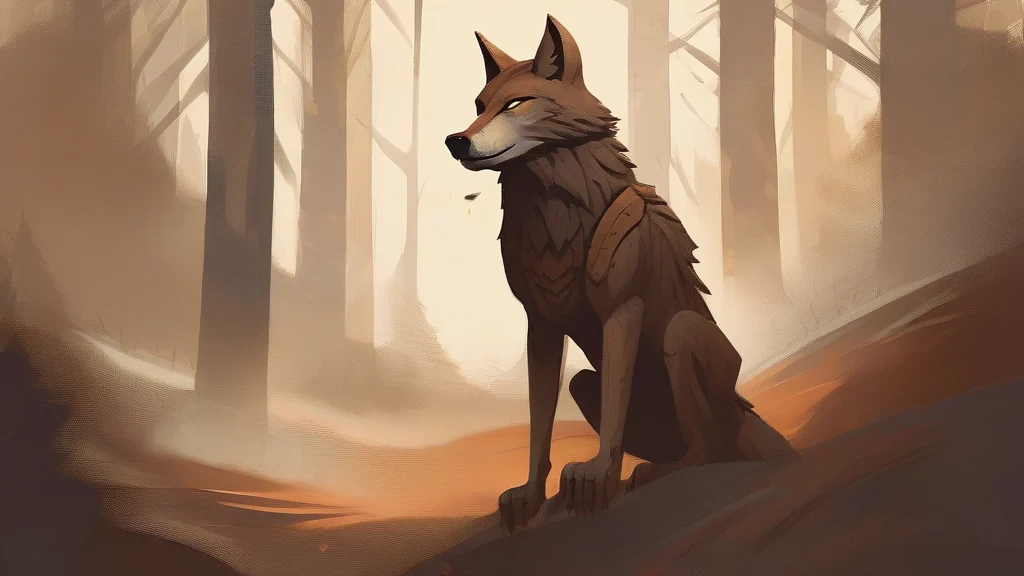
What does wolfkin mean?
Wolfkin is a rare English noun meaning a young wolf, or wolf cub. Its construction is transparent: wolf plus the diminutive suffix -kin, so the word literally conveys “little wolf.” It belongs mainly to older, literary or descriptive English rather than everyday contemporary speech, where speakers usually say wolf cub or wolf pup. In context, wolfkin can have a slightly archaic, storybook quality, especially when used in narrative prose describing a wolf cub. It does not ordinarily denote an adult wolf, a wolf-dog hybrid, or a member of a wolf pack. Because the word is uncommon, its vivid literal elements can make it useful in wildlife descriptions, fantasy writing, or deliberately historical-sounding prose, although a more familiar term may be preferable in technical writing about canids. Wolfkin is a countable noun, with wolfkins as its regular plural. Its rarity should not be mistaken for specialized zoological terminology: it is chiefly an older or stylized English word for the young of a wolf rather than a formal biological category.
nounA young wolf; a wolf cub.
- A young wolf, especially a newly born or very small wolf.
"The wolfkin cautiously emerged from the den and looked toward the distant ridge."
"The wolfkin cautiously emerged from the den and looked toward the distant ridge."
"The illustration shows a wolfkin following its mother through the snow."
The regular plural is wolfkins, though the word itself is uncommon in contemporary usage.
"The den sheltered two wolfkins and their mother."
Wolfkin is essentially “little wolf” in one transparent word—a diminutive that survives in older and literary English.
Reviewed by Deb Chak, Editor. AI-assisted content curated by RJS Tech Solutions LLP.
Etymology of wolfkin
Wolfkin combines the Old English word wulf, modernized as wolf, with the Middle English diminutive suffix -kin. The compound is recorded in English from the early 17th century. Its vocabulary relatives include English wolf and forms such as lupine, which entered English from Latin lupus.
Related word forms
How wolfkin is actually used
Rare and mainly literary or historical. In modern everyday English, wolf cub or wolf pup is more usual.