
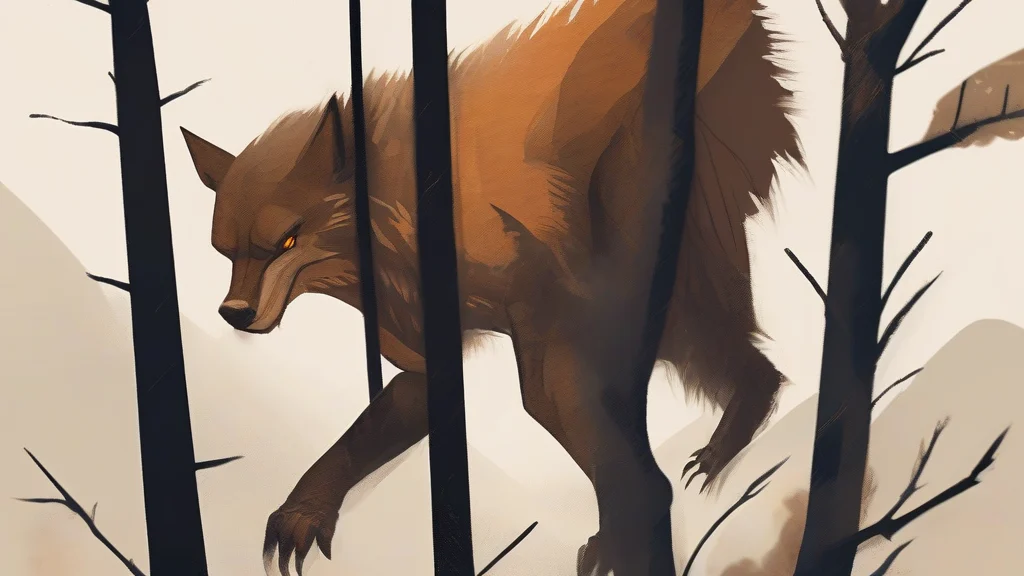
What does wolver mean?
A wolver was, in older English, a person who habitually stole cattle or other livestock. The word now sounds archaic and is chiefly found in historical writing, literature, or discussions of older dialects and criminal activity. It can also appear archaically as another name for the wolverine, the powerful, short-legged mustelid of northern Eurasia and North America. These senses should not be confused: the historically dominant use of wolver concerns a person who steals livestock, while wolverine ordinarily names the animal today. The noun has no common modern inflected forms and is not normally used in productive phrases. For clarity in contemporary speech, 'cattle thief' or, where appropriate, 'rustler' is more immediately understandable. Despite its limited modern use, wolver is a vivid example of how vocabulary shifts: an everyday label for a recognizable type of livestock thief has largely yielded to more precise alternatives, while the name of the animal remains familiar.
A person who habitually stole cattle or other livestock.
"The constable accused the wolver of taking the village's calves."
Now archaic or obsolete; in modern English, 'cattle thief' or 'rustler' is usually clearer.
Archaically, a wolverine.
"The account describes the wolver as a fierce animal found in cold northern forests."
This older animal sense is rare today; use 'wolverine' in contemporary writing.
The regular plural 'wolver' is possible when referring to multiple people; 'wolver' is also attested in the plural. Because the word is now archaic, plural usage is uncommon.
"They knew them all as wolver, men who could disappear among the cattle at night."
Today the wolverine is a much more familiar animal, but the word wolver preserves the older image of a determined cattle thief.
Reviewed by Deb Chak, Editor. AI-assisted content curated by RJS Tech Solutions LLP.
Etymology of wolver
Wolver is probably an agent-noun formation associated with wolf, traditionally interpreted as a person who steals or kills cattle like a wolf. The word appeared in Middle English in the sense of a cattle thief. A separate older sense for the wolverine also existed, and the modern name wolverine ultimately developed through association with the wolf.
How wolver is actually used
The word is now rare or obsolete in ordinary use. Its historical sense of 'cattle thief' is distinct from the modern animal name 'wolverine,' although wolverine was formerly also used for the animal. Modern speakers should normally use 'cattle thief' or 'rustler'.
Easily confused with wolver
A wolver was historically a cattle thief, whereas a wolverine is the mustelid also called the glutton.