
What does woodborer mean?
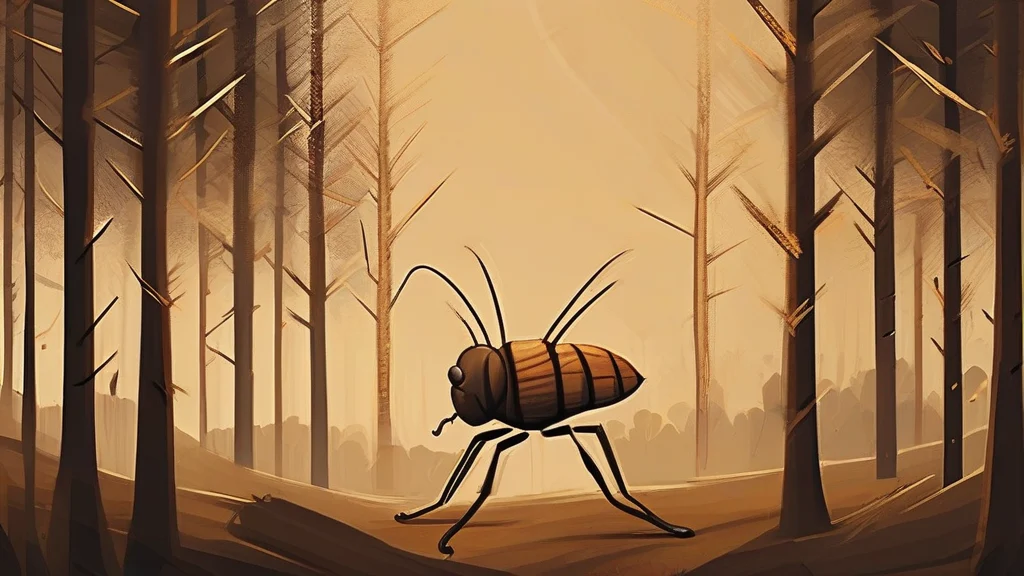
A woodborer is an insect that bores into wood, especially a beetle or its larva. Such insects may be conspicuous only through the small holes they make in timber, furniture, flooring, or other wooden objects; their larvae often feed within the wood before emerging as adults. The word can also denote a boring tool used by carpenters and other craftspeople. In ordinary British usage, woodborer is often more specific or descriptive than woodworm, which commonly refers to the larval stage of certain wood-boring beetles. The term is useful when discussing structural damage, infestations, or the biology of insects that exploit wood. Although it may sound familiar as a household problem, woodborers are not limited to houses: they affect trees, timber, furniture, and wooden artifacts across many environments.
nounA woodborer is an insect that bores into or through wood, especially a wood-boring beetle or its larva. The term can also denote a tool used to make holes in wood.
- An insect that bores into or through wood, especially a beetle or beetle larva.
- A tool used to drill or bore holes in wood.
"The old beams showed clear damage from woodborer activity."
"A woodborer infestation left the floorboards riddled with small exit holes."
"The carpenter selected a woodborer to drill the joint accurately."
The standard plural of the noun; it is used for individual insects, larvae, infestations, or tools as context requires.
"Several woodborers had damaged the old shed."
Sometimes called a woodworm, it is really a master of timber destruction hidden inside the wood itself.
Reviewed by Deb Chak, Editor. AI-assisted content curated by RJS Tech Solutions LLP.
Etymology of woodborer
Woodborer is an English compound formed from wood and borer, with borer derived from bore, the verb meaning to drill or make a hole, plus the agent-forming suffix -er. The drilling sense of bore has medieval English roots, while the compound developed in modern English for an insect or implement that bores wood. Its components are transparent and are shared by related forms such as boring and borehole.
How woodborer is actually used
As an insect term, woodborer is more common in British English and is usually more technical or descriptive than the everyday word woodworm. When referring to a tool, it is often written as a hyphenated compound, wood-borer.
Easily confused with woodborer
A woodworm is specifically the larva of a wood-boring beetle, whereas a woodborer is a broader term that may refer to the insect generally.