
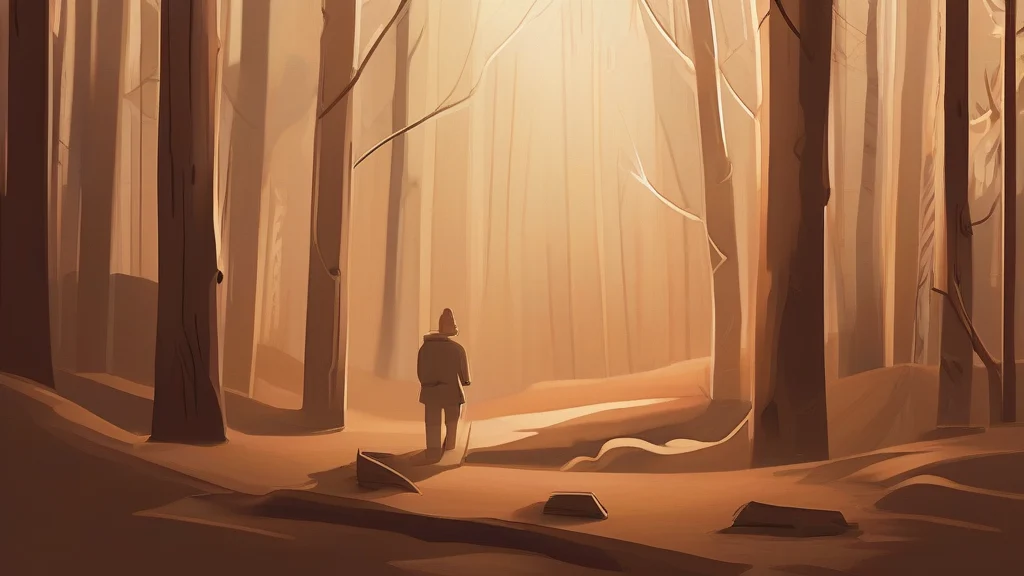
What does woodier mean?
“Woodier” is the comparative form of the adjective “woody.” Its dominant sense describes land that has more trees, woodland, or vegetation: one might say that a valley, hillside, or forest is “woodier” than an open plain. In a less common sense, it describes something that resembles wood more closely in texture, appearance, or character. The related expression “more woody” is frequently used in formal writing, although “woodier” can sound more vivid and rhythmically effective. Although “woodier” is grammatically an inflection rather than an independent lexical word, it is useful when comparing landscapes, materials, or qualities associated with wood. Its vocabulary relatives—including “wood,” “wooden,” and “woodland”—all reflect the same basic English noun for the substance from which trees and timber are made.
adjectiveComparative of woody. It means having more trees or being more heavily wooded; more rarely, it means having a greater resemblance or quality of wood.
- Having more trees or being more heavily covered with woodland.
- Having a greater resemblance to wood in texture, appearance, or quality.
"The hills become progressively woodier as the road follows the river north."
"The northern valley is woodier than the open farmland surrounding it."
"As the old boards age, their surfaces take on a woodier appearance."
When two forests enter a competition, the one with more trees is the woodier one.
Reviewed by Deb Chak, Editor. AI-assisted content curated by RJS Tech Solutions LLP.
Where does woodier come from?
“Woodier” is the comparative of “woody,” formed by changing the final y to i and adding the comparative suffix -er. “Woody” derives from the English noun “wood,” which continues Old English “wudu.” This Old English word belonged to the Germanic family and was related to forms in other Germanic languages, including Old Norse “viðr.”
Related word forms
How woodier is actually used
This is an ordinary comparative adjective in descriptive and literary English. The alternative construction “more woody” is often smoother in formal prose, while “woodier” has a slightly more rhythmic or emphatic quality.
Easily confused with woodier
“Woody” is the positive adjective, while “woodier” is its comparative form, meaning “more woody.”