
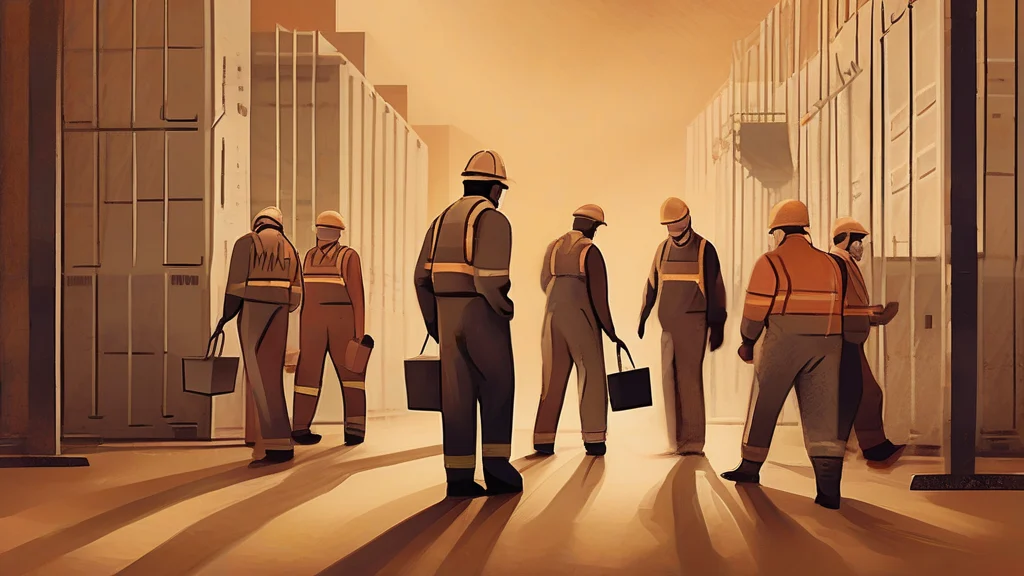
What does workforce mean?
Workforce means people who work, considered collectively. The word can describe the employees of one company or institution, the workers in an industry, or the broader supply of labor available to an economy. In business and economic contexts, it is more formal and precise than “workers,” because it emphasizes a group and often its size, skills, or participation. A workforce may be described as skilled, experienced, young, seasonal, or expanding, so the term frequently appears in discussions of hiring, training, labor shortages, and workforce development. Although usually a count noun, workforce commonly takes a singular verb when it refers to one organization's employees: “The workforce is expanding.” Its plural, workforces, is useful for comparing distinct populations, as when contrasting the technology workforce with the manufacturing workforce. Overall, workforce is a practical term for thinking about people collectively as part of an organization or economic system, rather than individually as employees.
nounThe total number of people employed by a business, organization, industry, or economy, considered collectively. It can also refer more broadly to the workers or labor available within a particular sector or area.
- All the employees of a business, institution, or other organization, considered collectively.
- The workers employed in a particular industry or occupation.
- The broader supply of workers available to an economy or labor market.
"The company is investing in training to expand its skilled workforce."
"A shortage of nurses is placing considerable pressure on the healthcare workforce."
"The regional workforce is largely concentrated in agriculture and tourism."
The plural is used when referring to distinct employee populations, sectors, or organizations.
"Workforces across the technology and healthcare sectors are expanding rapidly."
The term emerged in the mid-19th century by joining work and force, capturing the idea of people working together as a collective source of labor and power.
Reviewed by Deb Chak, Editor. AI-assisted content curated by RJS Tech Solutions LLP.
Where does workforce come from?
Workforce is a compound formed from work and force during the mid-19th century. Work descends from Old English weorc, while force came through Old French from Latin fortia, a noun meaning strength or power. Words such as workshop, workman, and workday share the older work element and reflect its long-established associations with labor and activity.
How workforce is actually used
Workforce is standard in business, employment, education, and economic contexts. It usually takes a singular verb when it denotes one organization's employees, as in “the workforce is expanding.” It is often more formal and collective than “workers,” and it may emphasize a population's size, skills, availability, or participation rather than individual employees.
Easily confused with workforce
A workforce is the people who perform work, whereas a workplace is the physical location or setting in which they work.