
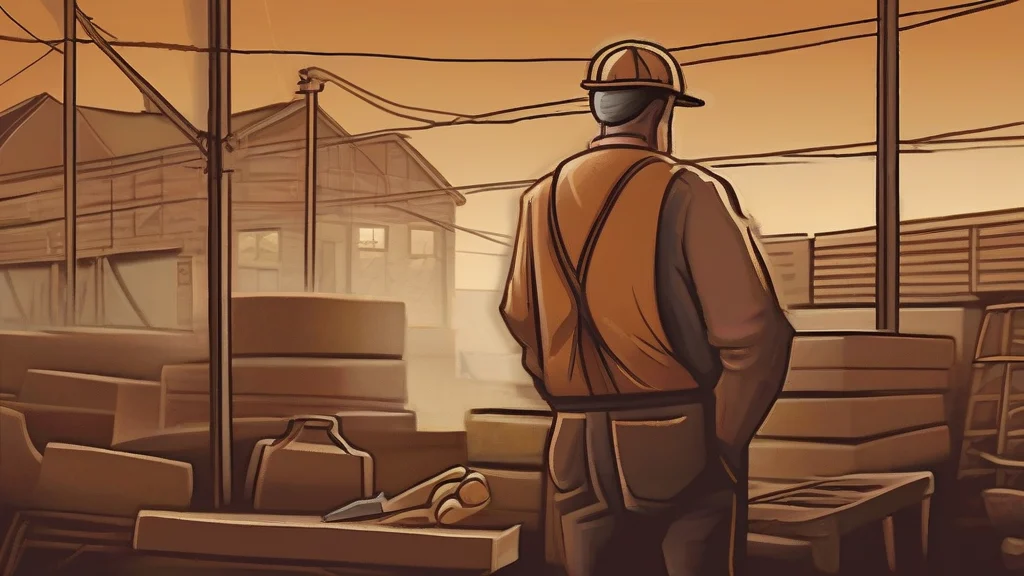
What does workingman mean?
A workingman is a man who works, especially a manual labourer or a person regarded as belonging to the working class. The word is commonly used when a speaker wants to draw attention to occupation, social position, or the relationship between workers and the conditions in which they live. In contemporary English, the two-word expression “working man” is generally more frequent, while the single-word form can sound traditional, formal, or historically marked. “Workingman” is not restricted to physical labour: it can also describe a working-class man in a broader social or political sense. For example, literary and political discussions may contrast the workingman with employers, property owners, or other representatives of privilege. The word is therefore more pointed than the neutral terms “worker” or “employee,” and it should be used where that social emphasis is intended. Its compact compound structure also makes it useful in writing about labour, class, and social history.
nounA man who works, especially one who performs manual labor or belongs to the working class. The term can also emphasize a man's social identity as a wage earner or laborer.
- A man who performs manual or other practical work, especially one employed as a labourer.
- A man belonging to or identified with the working class.
"The workingman left the factory at the end of a long shift."
"The workingman searched for a better job in the city."
"In the nineteenth century, the workingman was frequently portrayed as the central figure of industrial society."
“Workingmen” is the standard plural of the one-word form, although “working men” is more common in modern usage.
"The workingmen gathered outside the factory to discuss the new contract."
The one-word spelling makes a social world in a single compound: labor, class, and identity.
Reviewed by Deb Chak, Editor. AI-assisted content curated by RJS Tech Solutions LLP.
Etymology of workingman
“Workingman” is an English compound formed from “working” and “man.” The two elements come from ordinary English roots: “working” is derived from “work,” while “man” continues Old English “mann,” the ordinary word for an adult human male. The compound reflects the older English tendency to join related words closely, although modern usage often separates the same words as “working man.”
How workingman is actually used
The one-word form is less common than the two-word form “working man” in modern standard English, particularly in American usage. “Workingman” can sound somewhat formal, historical, or class-conscious, and it often carries an emphasis on working-class identity rather than simply employment.
Easily confused with workingman
A workman may be a skilled craftsperson or worker employed in a trade, whereas workingman more often emphasizes a manual laborer or a member of the working class.