
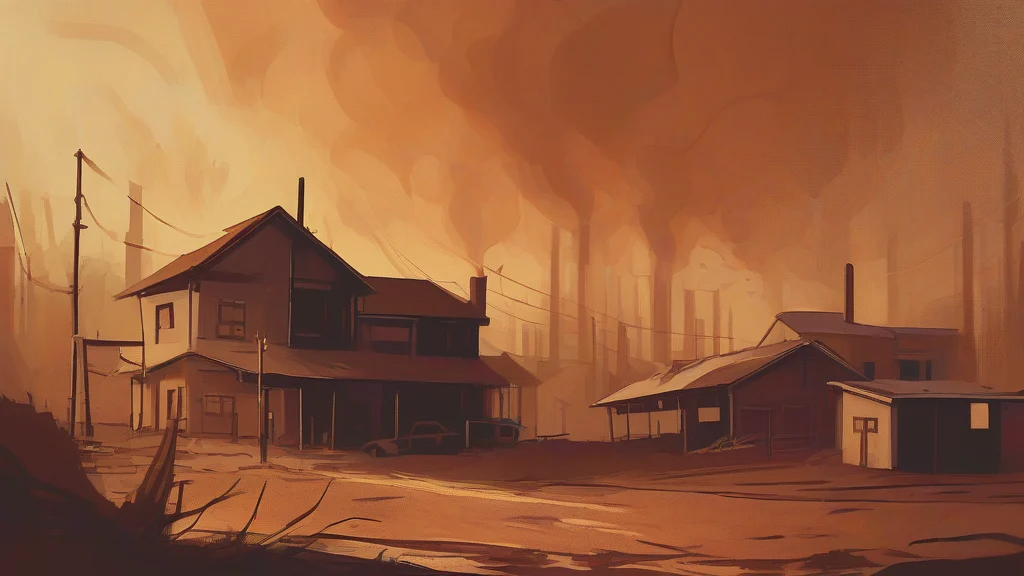
What does worsening mean?
“Worsening” describes a situation, condition, or problem that is becoming progressively less satisfactory, dangerous, successful, or manageable. It is especially common in reporting about health, weather, finances, security, and social conditions: a worsening crisis, worsening conditions, or a worsening outlook. The word can function as an adjective, as in “a worsening situation”; as a noun referring to the process of deterioration, especially in phrases such as “the worsening of the economy”; and as a present participle in constructions such as “the problem is worsening.” Its implication is usually that the negative development is continuing rather than being a single isolated setback. Compared with “getting worse,” “worsening” often sounds more formal and concise, making it useful in journalism, public statements, and analytical writing. It carries an unmistakably negative trajectory, but it can describe either a decline in quality or an increase in severity.
Becoming progressively worse or less satisfactory.
"Residents reported worsening air quality throughout the summer."
Common before nouns such as “conditions,” “situation,” “weather,” and “crisis,” and also used predicatively in constructions such as “the situation is worsening.”
The process or condition of becoming worse.
"The worsening of the housing market has placed many families under pressure."
Often used with “the” and “of,” as in “the worsening of conditions.”
The present participle of worsen, used to indicate an action or process of becoming worse.
"The road conditions are worsening as the storm approaches."
This form is especially frequent with linking verbs such as “is,” “are,” and “seems.”
The plural is uncommon; the process is normally expressed in the singular or as “the worsening of something.”
"The report documented successive worsenings in local air quality."
Worsening is the word that turns a neutral update into a warning sign.
Reviewed by Deb Chak, Editor. AI-assisted content curated by RJS Tech Solutions LLP.
Where does worsening come from?
“Worsening” was formed by adding the present-participle ending -ing to “worsen.” “Worsen” comes from “worse,” the comparative form of “bad,” and was originally associated with the idea of becoming worse rather than already being worse. The adjective “worse” descends from Old English “wiersa,” while its superlative “worst” came from Old English “wyrst.” The same Germanic base underlies related forms in several Germanic languages.
How worsening is actually used
The word is neutral in tone but strongly suggests a continuing deterioration. As a verb form, it is common in formal reporting and careful analysis, as well as ordinary conversation.