
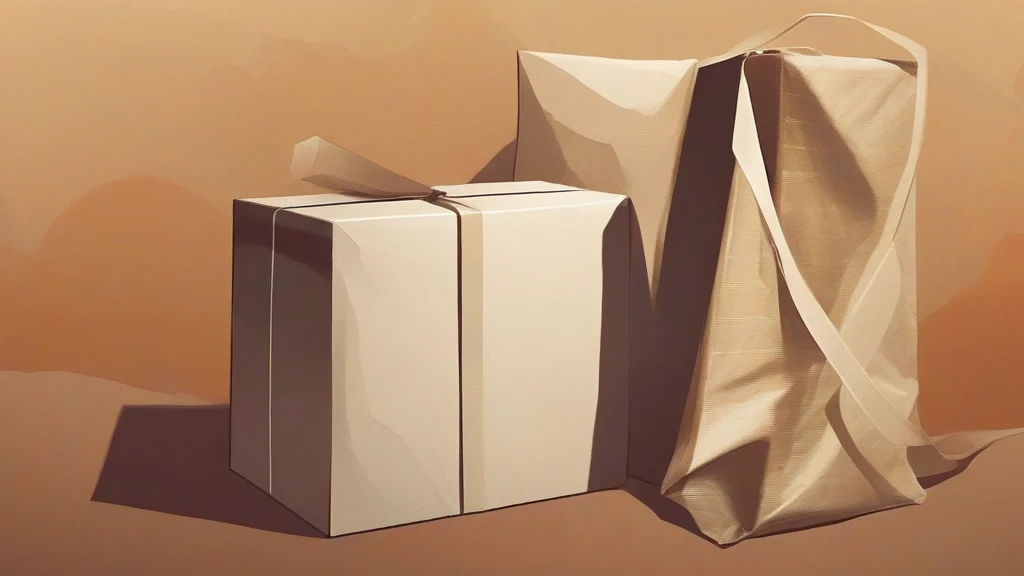
What does wrapping mean?
Wrapping names both an everyday activity and the material used in it. As a noun, it can refer to paper, cloth, film, or another covering placed around an object, as well as the completed package or its outer layer. Gift wrapping is especially associated with decorative coverings and ribbons, but wrapping also has practical uses for protecting, bundling, storing, or transporting objects. As a verb, wrapping describes folding, tying, or otherwise enclosing something securely. The expression 'wrap up' additionally means to finish a task or activity. Although the word is simple and neutral, it often carries a warm, festive association when used of presents. In descriptive writing, 'wrapping' can suggest layers, concealment, or visual effect: an object may be attractive because of its wrapping, or a story may gradually wrap around a central idea. The related form 'wrapper' names an individual enclosing piece, while 'wrapped' commonly serves as an adjective describing a covered object.
Wrapping is covering material, such as paper, cloth, or film, used to enclose, protect, bind, or decorate an object; it can also refer to the resulting package, outer layer, or the process of covering an object.
"The shop offered gift wrapping in several colours."
The word is usually a mass noun when referring to material. The plural 'wrappings' is used for distinct coverings or pieces of packaging.
To wrap an object is to enclose it in paper, cloth, film, or another covering, usually by folding or securing the material around it.
"They wrapped the fragile vase in layers of bubble wrap."
The word is neutral and common in both formal and informal contexts. In the phrasal verb 'wrap up', it can mean to finish a task.
The plural is used for separate coverings, packages, or pieces of wrapping material; for the material itself, the uncountable singular is more usual.
"She put the empty wrappings in the recycling bin."
Reviewed by Deb Chak, Editor. AI-assisted content curated by RJS Tech Solutions LLP.
Where does wrapping come from?
The verb descends from Old English 'wrappan', meaning 'to wrap or envelop', which was inherited from a Proto-Germanic root. The noun 'wrapping' developed from the action expressed by that verb and became common for covering material, packages, and the process itself. English forms such as 'wrapper' and 'wrappable' continue the same native Germanic word family.
Related word forms
How wrapping is actually used
As a noun, wrapping usually denotes covering material and is commonly treated as a mass noun; the plural 'wrappings' is used for separate coverings or pieces of packaging. As a verb, it is neutral and everyday, while 'swathe' has a more literary or specialized tone.
Easily confused with wrapping
Wrapping means covering or enclosing something, whereas warping means twisting, bending, or distorting something.