
What does wyvern mean?
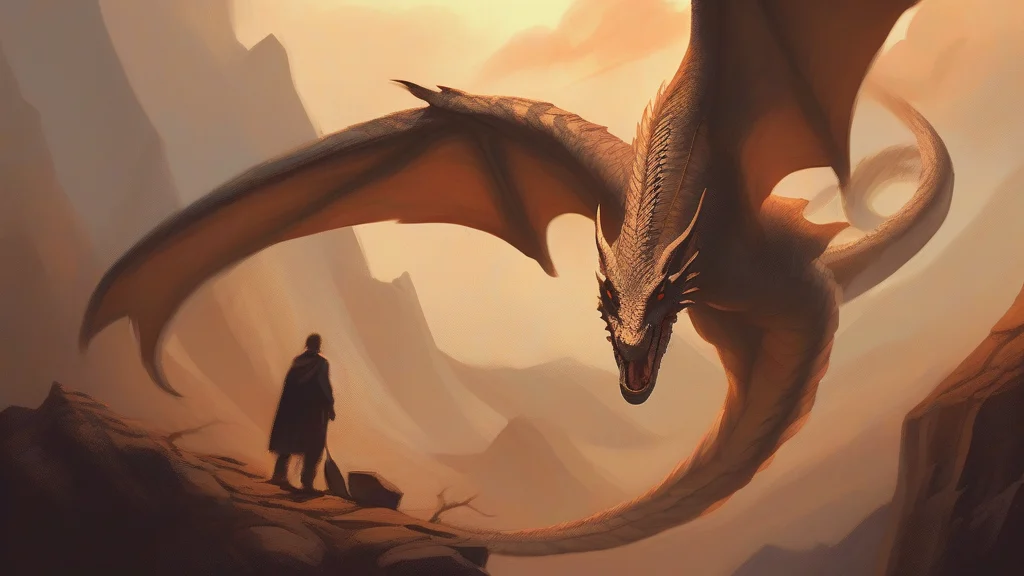
A wyvern is a mythical, dragonlike creature, usually shown as a serpent-bodied animal with two legs and wings. In modern use, the name distinguishes this two-legged dragon from other dragons, although the word was once used more broadly for dragons and serpents. A wyvern also has a technical role in heraldry, where it is represented as a hybrid with a dragon's head and wings, a serpentlike body and tail, and two clawed legs; the exact depiction can vary by tradition. The term appears especially in medieval legend, fantasy literature, and popular culture, often as a formidable flying enemy or guardian. Its unusual combination of reptilian features, wings, and only two legs makes it easy to distinguish from conventional dragons, griffins, and other fantastic beasts. Knowing “wyvern” is useful because it names a specific traditional creature rather than simply another word for any dragon.
nounA mythical dragonlike creature, typically depicted as a serpentine dragon with two legs and a pair of wings. The name also refers to the corresponding creature in heraldry.
- A two-legged, winged dragon or serpentine dragonlike creature.
- In heraldry, a two-legged dragonlike beast, usually shown with wings, a serpentine body and tail, and two clawed legs.
"The knight struck down the wyvern guarding the mountain pass."
"A wyvern circled above the castle before diving toward the courtyard."
"The wyvern sigil was emblazoned above the entrance to the old keep."
The standard plural adds -s: one wyvern, two wyverns.
"The old keep was guarded by two wyverns."
A wyvern is essentially a dragon on two legs—with wings.
Reviewed by Deb Chak, Editor. AI-assisted content curated by RJS Tech Solutions LLP.
Where does wyvern come from?
The word entered Middle English as wyvern, borrowing Old French wyverne, which came through Medieval Latin from a Germanic source. Its ultimate origin is the Germanic word represented by Old English wyrm, meaning “serpent” or “dragon,” which is cognate with words such as Old Norse ormr and German Wurm.
How wyvern is actually used
The word is chiefly literary, fantastical, or heraldic. Modern usage usually denotes the two-legged winged form, although older texts sometimes use it more broadly for a dragon or serpent.
Easily confused with wyvern
A wyvern is specifically a two-legged winged dragonlike creature, whereas wyrm is an archaic word for a dragon, serpent, or other crawling creature.
A dragon may have four legs and greater variation in appearance, while a wyvern is conventionally distinguished by having only two.