
What does yagi mean?
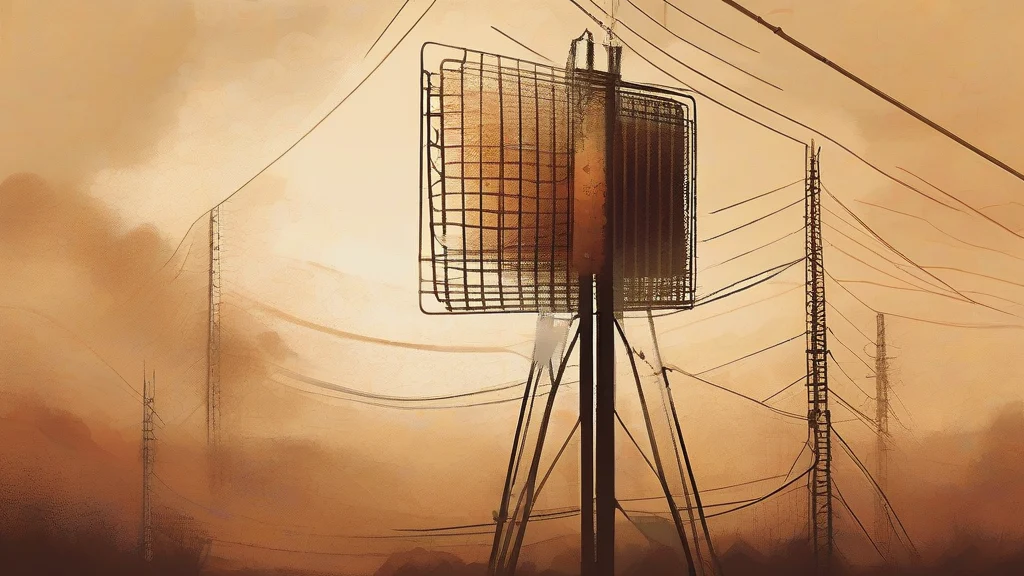
A yagi is a directional antenna whose central element and parallel elements are mounted along a horizontal supporting boom. It is used for television reception, radio communication, and other applications requiring a focused signal. In everyday American English, the word often refers specifically to the familiar rooftop television antenna, while British speakers may prefer the more general term “aerial.” The name comes from Japanese, where yagi means “goat”; the projecting rods of a rooftop aerial were said to resemble goat horns. Although originally associated with television reception, the term is now standard in radio engineering for the antenna design itself. A yagi can receive or transmit a signal more strongly in one direction than in others, making it useful where interference, distance, or signal direction needs to be managed. The word is both a piece of technical vocabulary and a familiar feature of the urban and suburban landscape.
nounA directional antenna consisting of one or more parallel elements mounted along a horizontal boom; in ordinary use, a television aerial of this design.
- A directional antenna with a central driven element and a series of parallel elements along a supporting boom, used especially for television reception and radio transmission.
"They mounted a yagi on the roof to improve the television signal."
"A yagi on the roof gave the cottage a much clearer television picture."
"The technician adjusted the yagi until the transmitter reached the station at full strength."
The plural yagis is used when referring to multiple individual antennas or antenna units.
"Several yagis are installed around the broadcasting tower."
A yagi is named for a Japanese word meaning “goat,” because the projecting elements of the antenna resemble a goat’s horns.
Reviewed by Deb Chak, Editor. AI-assisted content curated by RJS Tech Solutions LLP.
Etymology of yagi
The English word is borrowed from Japanese ヤギ (yagi), literally “goat,” which was used metaphorically for an aerial because its projecting elements looked like horns. It entered English in connection with television aerials and later became the established name for the antenna array itself. Japanese also uses 山羊 (yagi) for “goat,” a Sino-Japanese borrowing related to Chinese 山羊 (shānyáng, “mountain goat”).
How yagi is actually used
Yagi is an accepted technical term, especially in American broadcasting and amateur radio, but it can sound informal in general conversation. British speakers may use “aerial” more often.