
What does yataghan mean?
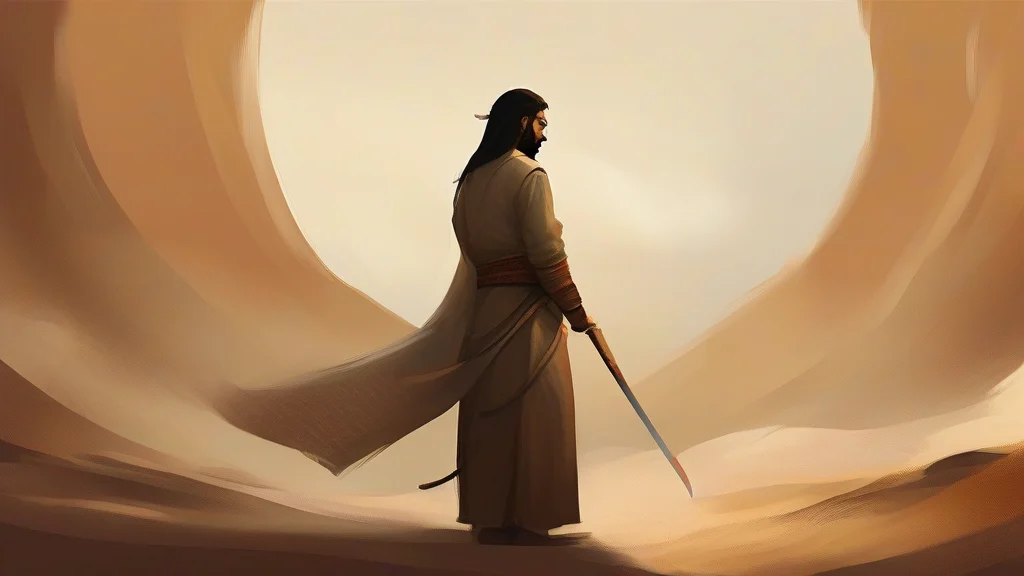
A yataghan is a Turkish saber, generally described as having a slightly curved, single-edged blade and a distinctive hilt. The word is uncommon in ordinary modern English, but it is established in historical writing, arms and sword collecting, and descriptions of Ottoman or Turkish military equipment. In these contexts, “yataghan” is more specific than the general words sword and sabre: it identifies a recognizable Turkish blade type rather than any curved weapon. Yataghans may be ceremonial, combat, or decorative, and examples commonly appear in museum catalogues, novels set around the Ottoman world, and discussions of edged weapons. The spelling is also worth remembering because its gh is pronounced as a hard g rather than being silent. Although a general synonym such as scimitar can sometimes overlap with its meaning, the terms are not perfectly interchangeable: a yataghan is specifically Turkish, whereas a scimitar refers more broadly to a curved, usually single-edged sword. The word therefore remains useful chiefly as a precise historical and specialist label.
nounA Turkish sword or saber, typically with a slightly curved, single-edged blade. The word is chiefly used in historical writing and specialist contexts such as arms collecting and museum descriptions.
- A Turkish sword or saber with a slightly curved, single-edged blade.
"The collector examined the jewel-hilted yataghan before purchasing it for the exhibition."
"The yataghan hung prominently in the ceremonial display."
"Historical accounts describe the rider drawing a yataghan during the skirmish."
The standard plural adds -s.
"The auction catalogue included two exceptional yataghans."
The Turkish saber with a tricky “gh” in its name—and no silent h to complicate matters.
Reviewed by Deb Chak, Editor. AI-assisted content curated by RJS Tech Solutions LLP.
Etymology of yataghan
The English word comes from Ottoman Turkish yatağan, a term associated with the Turkish sword, and was recorded in English by the early nineteenth century. The Ottoman form is generally related to Turkish yatak, meaning “bed” or “resting place,” and to the wider Turkic root yat-, meaning “to lie.”
Related word forms
How yataghan is actually used
Chiefly historical, literary, and specialist, especially in arms-and-armour terminology and museum catalogues. It is uncommon in contemporary general prose and denotes a particular Turkish sword type rather than a sword generically.
Easily confused with yataghan
A yataghan is a specifically Turkish saber with a slightly curved, single-edged blade, whereas a scimitar is the broader term for a curved, usually single-edged sword.
A yataghan is generally single-edged and slightly curved, while a kilij is a Turkish sword characteristically straight and double-edged.