
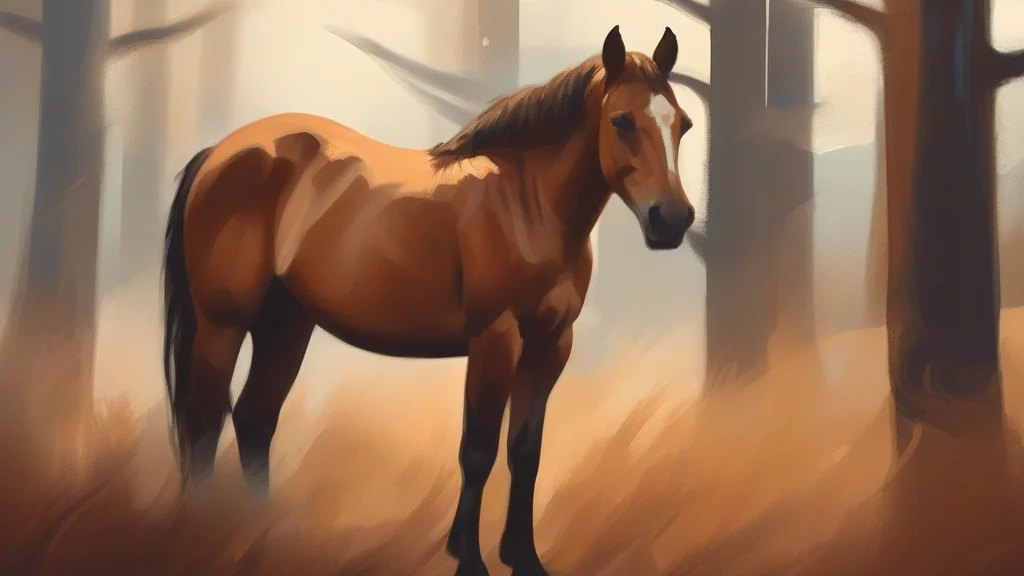
What does yearling mean?
A yearling is an animal that is approximately one year old, especially a horse in the period between its first and second birthdays. The word is particularly common among horse breeders, owners, and racing enthusiasts, who use it to describe a young animal being prepared for its racing career. A horse is usually called a yearling during its second year, after which it may be described as a two-year-old. The term can also refer more broadly to other young animals, such as cattle, although its strongest association is with horses. In dated or literary writing, yearling can describe an infant of around one year old, but “one-year-old” is more usual today. The word is useful when a more specific term is unavailable or when the age and status of a young animal need to be expressed together. Its familiar use in racing also gives it a specialist, practical quality rather than the neutral feel of simply saying “one-year-old.”
nounA yearling is an animal, especially a horse, that is about one year old or in its second year. The term is particularly common in horse breeding, racing, and sales, where it identifies an animal before it reaches two years old.
- An animal, especially a horse, that is about one year old or in its second year.
- In dated or literary use, a child around one year old.
"The sturdy yearling moved confidently around the paddock before the race."
"The colt was a sturdy yearling who had already shown plenty of promise."
"The sale drew bids for a dozen yearlings from breeders across the country."
"The yearling sat on the nurse's lap, clutching a small toy."
The standard plural is “yearlings,” with the plural form used for multiple young animals.
"The yard contained several yearlings being prepared for sale."
In the racing world, a horse's second birthday marks the moment when a yearling becomes a two-year-old.
Reviewed by Deb Chak, Editor. AI-assisted content curated by RJS Tech Solutions LLP.
Where does yearling come from?
The word is formed from “year” and the suffix “-ling,” a productive English suffix associated with young or smaller members of a category. The formation reflects the same broad Germanic pattern seen in words such as “duckling” and “stripling,” although yearling specifically emphasizes an animal's age rather than merely its youth. Its use for young horses became especially established in British and Irish racing vocabulary and was subsequently adopted in American racing and breeding terminology as well.
How yearling is actually used
Yearling is especially established in equestrian, breeding, and racing contexts. For a child, “one-year-old” is the usual modern expression. The sense referring to an infant is now dated or literary.