
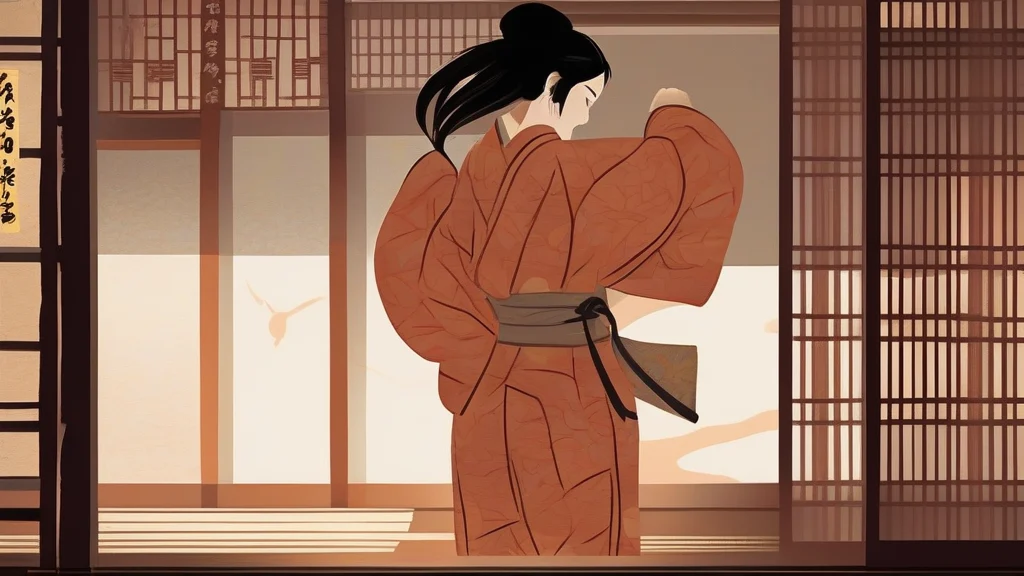
What does yukata mean?
Yukata is a lightweight Japanese robe whose name comes from its original role as clothing worn after bathing. In modern English, it most often refers to a casual cotton robe worn at home, on holiday, at summer festivals, or by people looking for a light alternative to formal dress. A yukata is usually looser and less formal than a traditional kimono, and it is commonly secured with an obi-style belt. The garment’s broad appeal comes from both its practicality and its decorative associations: familiar Japanese patterns, seasonal colours, and an unmistakably relaxed character make it a favourite choice for warm weather and celebratory occasions. Although it entered English as a Japanese loanword, the term now has a recognisable place in general international vocabulary. Learning it is useful because it identifies a specific cultural garment rather than simply a generic robe or dressing gown, and it captures the meeting of everyday comfort, traditional textile design, and relaxed elegance that makes the yukata distinctive.
nounA lightweight Japanese robe, traditionally worn after bathing and now also worn as casual summer clothing or at festivals.
- A lightweight Japanese robe traditionally worn after bathing and now commonly worn as casual summer clothing or festival attire.
"She put on a patterned yukata after her bath."
"She changed into a blue yukata after the bath."
"At the summer festival, he wore a patterned yukata with a sash."
The regular English plural is commonly used when referring to multiple garments.
"She bought several yukatas for the trip."
The name literally means “bathing clothes,” so its vacation identity was there before the floral prints.
Reviewed by Deb Chak, Editor. AI-assisted content curated by RJS Tech Solutions LLP.
Etymology of yukata
The word is borrowed from Japanese 浴衣 (yukata), a compound of 湯 (yu, “hot water”) and 衣 (kata, “clothing”), literally “bathing clothes.” The garment developed from informal wear after bathing into casual summer clothing and festival attire. Related Japanese forms including yubune (“bathroom”) and yubato (“bathhouse”) share the 湯 or bathing element.
How yukata is actually used
In English, the term has a summery, culturally specific association and is normally used for a traditional Japanese garment rather than as a general word for a robe.
Easily confused with yukata
A yukata is a lightweight, informal robe, whereas a kimono is the broader and usually more formal category of traditional Japanese garment.