
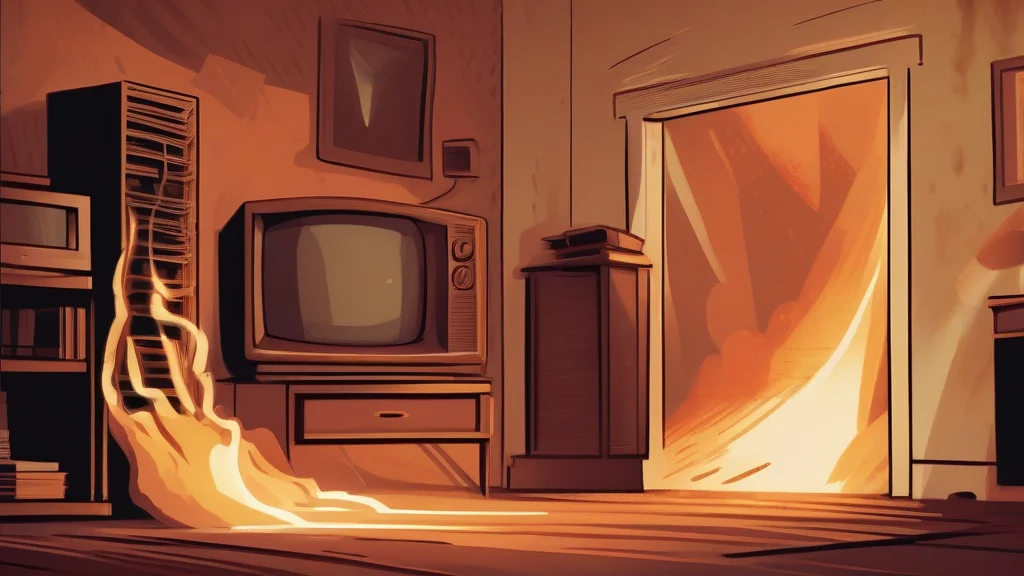
What does zapping mean?
Zapping most commonly means changing rapidly from one television or radio channel to another, usually by pressing buttons on a remote control. The phrase channel-zapping describes this familiar behaviour and can suggest boredom, indecision, or an interest in surveying what different programmes are offering. The word also has a more dramatic sense: to destroy, incapacitate, or attack something suddenly with a burst of energy or force, as in science fiction or informal descriptions of weapons and electrical devices. A further informal use means performing a task rapidly and energetically. Zapping is concise, vivid, and informal, but it is widely understood. Its range—from pressing a television remote control to describing a fictional ray capable of destroying a spacecraft—makes it especially useful for expressing sudden action and rapid movement.
To move rapidly from one television or radio channel to another; to destroy, incapacitate, or attack something suddenly with energy or force; or, informally, to do something quickly.
"He zapped through several channels before settling on the documentary."
The channel sense is informal but common. The destructive sense is especially associated with science fiction, technology, and forceful colloquial descriptions.
The act of changing rapidly from one television or radio channel to another, or the act of suddenly destroying or attacking something.
"The new streaming service was partly designed to reduce television zapping."
This use is usually uncountable in the sense of channel-surfing behaviour, though plural forms occasionally occur when referring to separate acts.
Usually treated as an uncountable noun for television channel-zapping; the plural is uncommon and is mainly used for separate instances.
"The film was interrupted by constant zappings from people searching for another programme."
Zapping began with the idea of a ray that could annihilate anything—then television remote controls turned it into an everyday habit of changing the channel.
Reviewed by Deb Chak, Editor. AI-assisted content curated by RJS Tech Solutions LLP.
Where does zapping come from?
The word zap emerged in American English in the 1930s in science-fiction contexts involving an energy ray. It was extended from causing sudden destruction by an imagined ray to attacking or destroying rapidly and, later, to changing television channels quickly. Zapping was formed from zap with the present-participle ending -ing.
Related word forms
How zapping is actually used
The verb is informal in most ordinary uses and often carries a sense of speed, suddenness, or destructive force. Channel-zapping is common in discussions of television and streaming behaviour, while the energy or ray sense is especially associated with science fiction and informal descriptions of technology.
Easily confused with zapping
Zapping usually involves changing channels, attacking, or destroying something, whereas zipping more commonly means moving or travelling rapidly.