
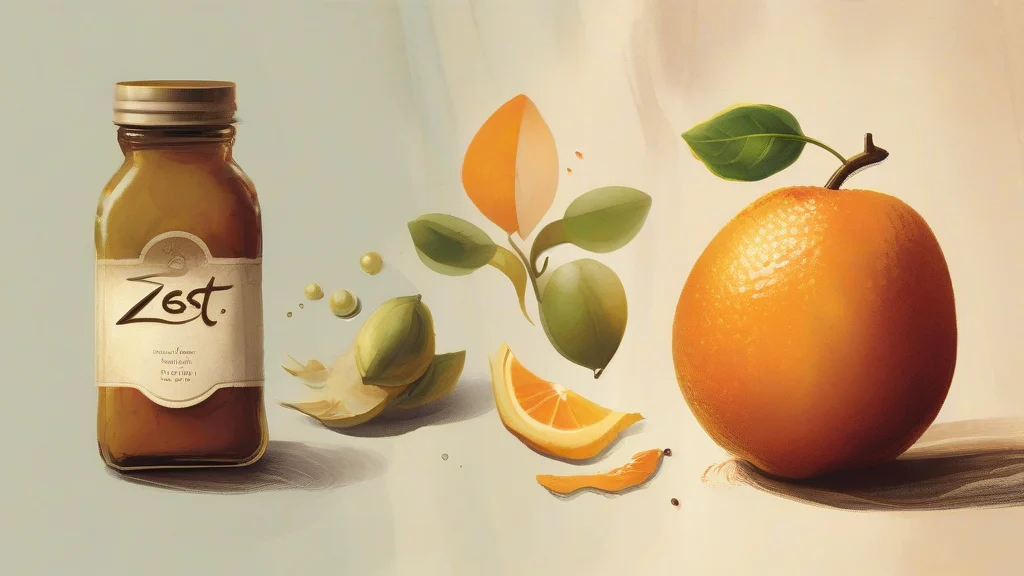
What does zest mean?
Zest most often means lively, enthusiastic energy, especially the kind of energetic interest that enlivens a person or activity. The expression "a zest for life" illustrates this familiar sense, while related uses describe a quality that adds freshness, flavor, or appeal to an experience, performance, or piece of writing. Zest can also refer literally to the colored outer layer of citrus fruit, where aromatic oils give orange or lemon peel much of its distinctive fragrance and flavor. In figurative contexts, the word is usually approving: zest suggests vitality, curiosity, and an ability to make ordinary things more engaging. It works well for both personal qualities and the effects of art, food, conversation, or travel. Because it combines the idea of citrus flavor with the idea of invigorating energy, zest is especially useful when describing something that is lively without being overly forceful.
Enthusiastic energy or vitality; a quality that adds flavor, freshness, or appeal; the colored outer layer of a citrus fruit.
"The young musician performed with remarkable zest and originality."
The figurative senses are common and generally positive. The literal culinary sense usually refers specifically to the colored outer peel rather than the white pith.
To add zest, flavor, or vitality to something.
"Her quick wit zest the otherwise solemn meeting."
This verb is much less common than the noun and is chiefly informal or literary.
The plural is grammatical but less common than the mass noun "zest"; it is especially used when referring to peel from different fruits or distinct pieces of peel.
"The recipe combines the zests of lemon and lime."
Zest began as citrus peel and later became a metaphor for anything that adds sparkle, flavor, or energetic appeal.
Reviewed by Deb Chak, Editor. AI-assisted content curated by RJS Tech Solutions LLP.
Where does zest come from?
Zest entered English in the eighteenth century from French zeste, meaning the outer peel of a citrus fruit. Its figurative use for piquant flavor, liveliness, and enlivening quality developed from the citrus sense. The French word is traced to Latin zestum, although the deeper ancestry of that Latin term is less certain.
Related word forms
How zest is actually used
The noun is common in both British and American English, although its figurative sense often has an informal, upbeat register. The literal citrus sense is chiefly used in cooking. The verb is uncommon and is mainly informal or literary.