
What does zikurat mean?
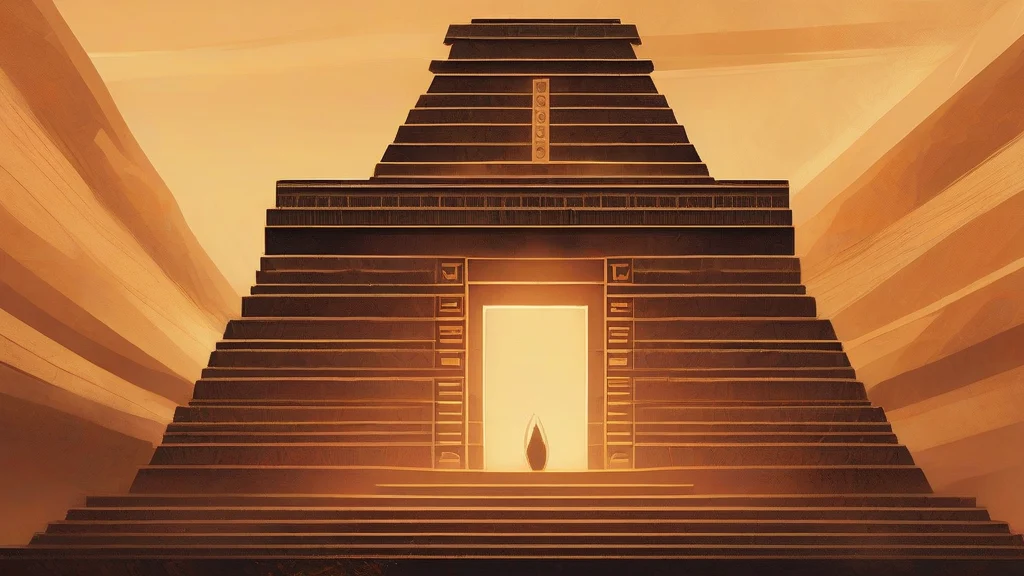
A zikurat is an ancient Mesopotamian monumental structure built as a series of receding platforms, with stairways leading toward a summit shrine. Although the standard modern English spelling is “ziggurat,” “zikurat” is a recognized variant found in specialist writing. The word is chiefly used by archaeologists, art historians, and writers describing ancient Near Eastern architecture. Zikurats are important because they show how religious communities used monumental construction, baked brick, and complex stairways to connect earthly space with the divine. The best-known example is the Great Ziggurat of Ur in present-day Iraq, whose summit temple and surrounding complex were partly excavated and partially reconstructed. The term is more exact than a generic “stepped pyramid” because it refers to a specific architectural form associated with ancient Mesopotamia, even though other Near Eastern stepped monuments can resemble it. Its compact, resonant name makes it useful when discussing monumental temples, urban sacred centers, and the archaeology of early urban societies.
nounA zikurat is a monumental ancient Mesopotamian structure formed from a series of receding platforms, with stairways leading toward a shrine at the summit. The alternative spelling zikurat is less common than the standard modern English spelling ziggurat.
- An ancient Mesopotamian temple or monument consisting of successive raised platforms connected by stairways and usually crowned by a shrine.
"The guide described the zikurat as a sacred staircase rising above the flat Mesopotamian plain."
"Excavators uncovered remains of a zikurat beside the ancient city of Ur."
"The lecture compared the zikurat with other monumental temples of ancient Mesopotamia."
The plural is formed by adding -s; the more common spelling ziggurat normally pluralizes as ziggurats.
"The museum's collection includes photographs and models of several zikurats."
The Great Ziggurat of Ur reminds us that ancient builders could make a stepped mountain seem to touch the heavens.
Reviewed by Deb Chak, Editor. AI-assisted content curated by RJS Tech Solutions LLP.
Etymology of zikurat
Zikurat is an alternative English spelling of ziggurat. The word entered English in the early seventeenth century through French ziggourat, ultimately derived from Arabic ziqāq, meaning “stairway” or “path,” and commonly traced further to Akkadian ziqqurratu. Ziggurat and its spelling variants zikkurat, ziggurath, and zikurath developed as the word circulated in European languages.
How zikurat is actually used
A specialist, countable noun used chiefly in archaeology, art history, and discussions of ancient Mesopotamian architecture. It is uncommon in everyday English, and the more familiar spelling ziggurat is normally preferred in modern general writing.
Easily confused with zikurat
Ziggurat is the standard English spelling of the same ancient Mesopotamian stepped temple; zikurat is an accepted alternative spelling, not a different structure.