
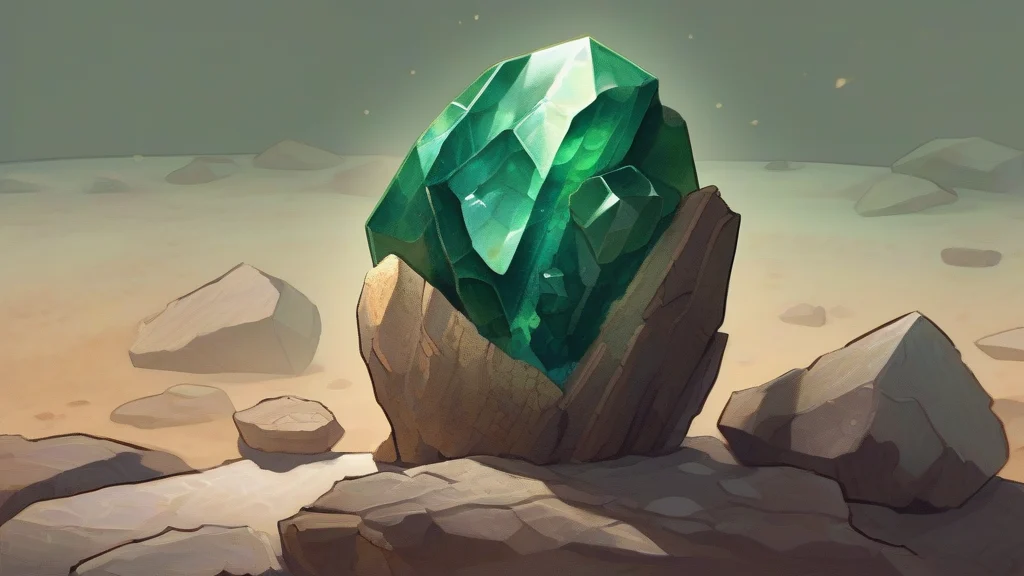
What does zoisite mean?
Zoisite is a calcium-aluminium silicate mineral in the epidote group, recognizable in prismatic crystals and best known for the colored varieties collected as gemstones. Pure material is commonly gray, white, or colorless, while impurities can produce green, yellow, brown, pink, or other hues; exceptionally, minute ruby inclusions create the prized material called ruby zoisite. Geologically, zoisite develops chiefly in metamorphic rocks, especially where calcium-rich fluids have altered other minerals, and it may also occur in skarn and eclogite. Its specialist vocabulary belongs to mineralogy, petrology, and gemology, where the name refers both to the mineral species and to cut or polished specimens. For general readers, “zoisite” is chiefly useful because it names an unusual combination of a precise mineralogical identity and attractive gem varieties, including the familiar green-and-red ruby zoisite.
nounA calcium-aluminium silicate mineral belonging to the epidote group, commonly occurring as prismatic crystals in metamorphic rocks. Zoisite occurs in several colors, and some varieties are collected or cut as gemstones.
- A calcium-aluminium silicate mineral of the epidote group, found principally in metamorphic rocks and occasionally used as a gemstone.
"The geologist identified the translucent green crystals as zoisite."
"Zoisite crystals occurred alongside garnet in the metamorphic rock."
"The jeweler set a polished ruby zoisite in a silver pendant."
The plural is used for multiple specimens, crystals, or occurrences of the mineral and is uncommon outside technical contexts.
"The collection included zoisites from several metamorphic deposits."
Ruby zoisite can hide glowing ruby needles inside green zoisite—an accidental red-and-green duet created by geology.
Reviewed by Deb Chak, Editor. AI-assisted content curated by RJS Tech Solutions LLP.
Etymology of zoisite
Zoisite was named by the French mineralogist René Just Haüy in the early nineteenth century in honor of Ernst von Zois, an Austrian naturalist and collector. The name preserves Zois's surname while adopting the familiar -ite ending used for many minerals. It is therefore a commemorative mineral name rather than a word formed from an ordinary descriptive root.
How zoisite is actually used
This is a specialist term used in mineralogy, petrology, and gemology. In gem descriptions, it may refer to the mineral species or to a cut, polished, or naturally formed specimen; the regional sense is not restricted.