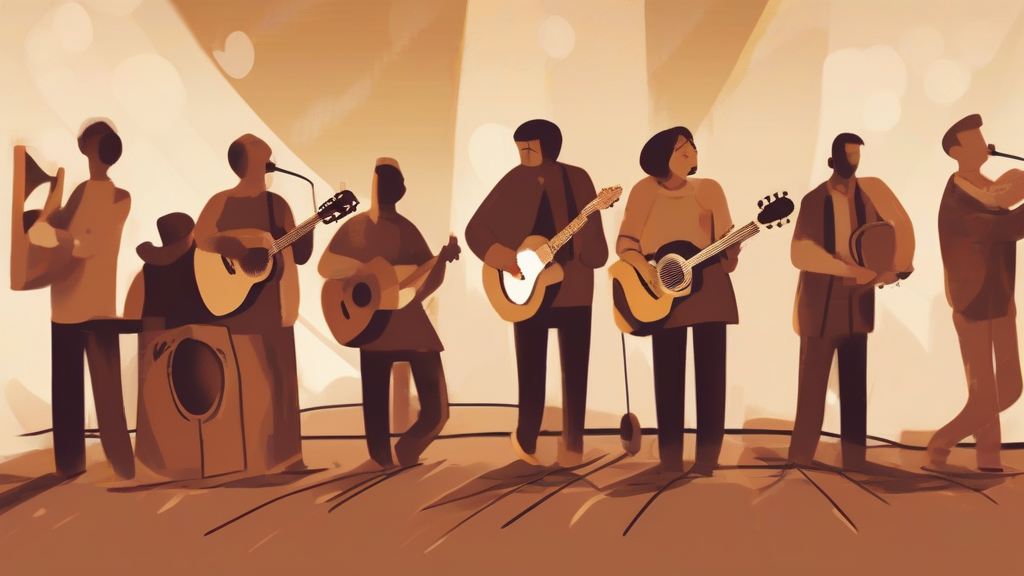
What does busking mean?
Busking is the act of performing music, dance, or other forms of entertainment in public places, usually for tips or donations. This practice allows artists to connect with audiences and earn money in an informal setting. Busking can take many forms, from solo musicians to dance troupes, and often occurs in popular tourist areas or busy city streets. While busking can be a great way for performers to gain exposure and build a following, it is also subject to local laws and regulations, which may restrict where and when busking can take place. As a result, buskers must be aware of their surroundings and the rules that govern their performances.
To perform music, dance, or other forms of entertainment in public places, typically for tips or donations.
"The musician was busking on the corner of 5th Street."
A performance or show given in a public place, often for tips or donations.
"The city's busking scene is thriving, with many talented performers taking to the streets."
Reviewed by Deb Chak, Editor. AI-assisted content curated by RJS Tech Solutions LLP.
Etymology of busking
The term 'busking' originated in the mid-19th century, derived from the word 'busk,' which means 'to perform in public.' The practice of busking has its roots in street performance and itinerant entertainment, with buskers often traveling from place to place to showcase their talents.
Usage notes
Busking can be a fun and creative way for performers to connect with audiences and earn money, but it may also be subject to local regulations and restrictions.