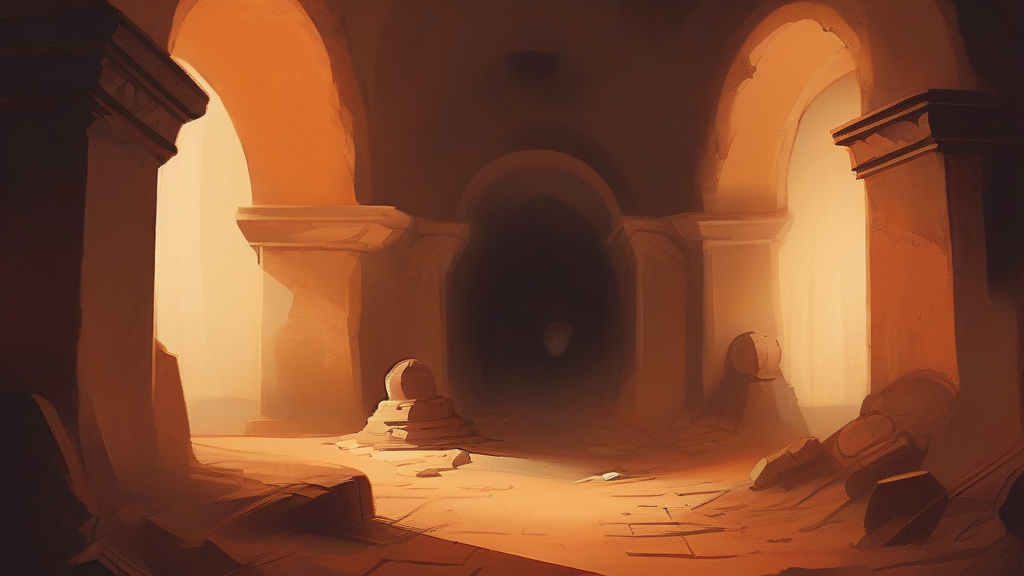
What does catacombs mean?
Catacombs refer to underground burial chambers or networks of hidden passageways and tunnels. These structures are often found in ancient cities, such as Rome and Paris, and can be extensive, stretching for miles beneath the city. The term 'catacombs' can also be used more broadly to describe any underground space or hidden area. In modern usage, catacombs are often associated with historical or archaeological sites, and are typically visited by tourists or enthusiasts. The concept of catacombs has also been used in fiction and literature to describe hidden or secret spaces. Overall, catacombs are a fascinating and complex topic that offers insights into the history, culture, and architecture of ancient civilizations.
noun
Underground burial chambers or networks of hidden passageways and tunnels.
"The tourists visited the famous Parisian catacombs, which stretch for miles beneath the city."
noun
A network of hidden passageways or tunnels, not necessarily associated with burial.
"The secret service used a network of hidden catacombs to move undetected through the city."
Reviewed by Deb Chak, Editor. AI-assisted content curated by RJS Tech Solutions LLP.
Etymology of catacombs
The term 'catacombs' comes from the Greek prefix 'cata-' meaning 'down' or 'against', and the Latin 'catacomba', meaning 'underground burial place'. The concept of catacombs has its roots in ancient civilizations, where underground burial chambers were used to honor the dead. Over time, the term 'catacombs' has evolved to include any underground space or hidden area.
Usage notes
In modern usage, catacombs are often associated with historical or archaeological sites, and are typically visited by tourists or enthusiasts. The term 'catacombs' can also be used more broadly to describe any underground space or hidden area.