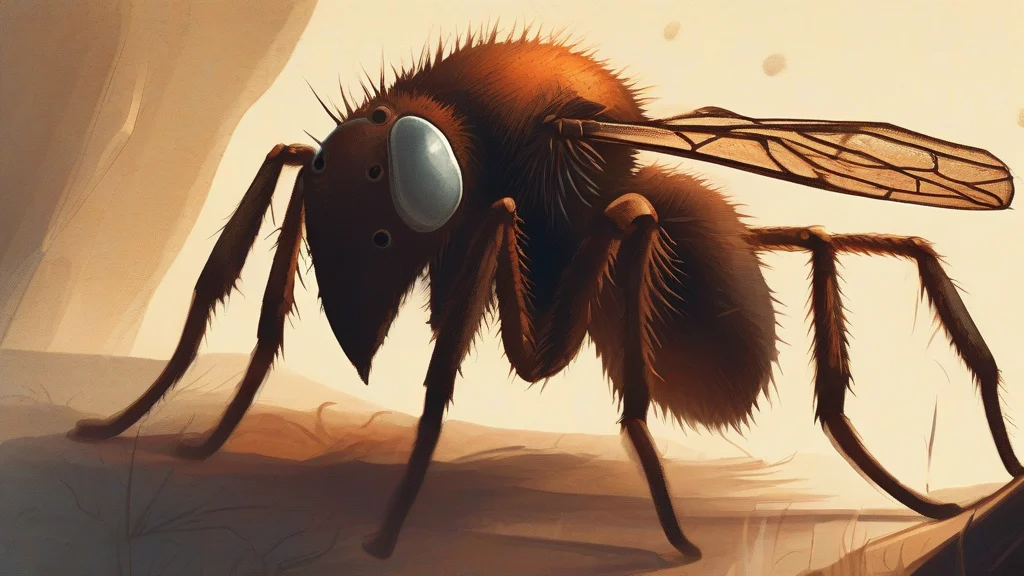
What does acari mean?
Acari is the plural of 'acarus' and denotes mites and ticks — minute arachnids belonging to the order Acari. Unlike insects, these creatures have eight legs and no antennae, placing them in the same class as spiders. The term appears chiefly in scientific, agricultural, and medical contexts: soil ecologists count acari when assessing soil health, farmers monitor stored-product acari that spoil grain, and physicians encounter parasitic acari such as the itch mite responsible for scabies. House-dust acari are among the most familiar to the public, being a major source of allergens in bedding and upholstery. Because the word is technical rather than colloquial, it carries a precise, clinical connotation and is best reserved for formal or specialist writing. Its singular counterpart, 'acarus', is rare outside taxonomy, so 'acari' is the form most readers will actually meet in print.
nounAcari is the plural of 'acarus', referring to mites and ticks — small arachnids of the order Acari, many of which are parasitic or cause skin conditions such as scabies.
- Mites and ticks collectively; members of the order Acari, especially when discussed as a group in scientific, agricultural, or medical contexts.
"The stored grain was infested with acari, prompting the farmer to fumigate the silo."
"House-dust acari are a leading trigger of allergic asthma worldwide."
"The entomologist catalogued the acari recovered from the soil samples under a dissecting microscope."
'Acari' is itself the standard plural of 'acarus'; it normally takes plural verbs in English usage.
"Several genera of acari were present in the leaf-litter sample."
The word for the tiny mites living in your mattress comes straight from Greek — and it's the root of 'acaricide', the pesticide built to kill them.
Reviewed by Deb Chak, Editor. AI-assisted content curated by RJS Tech Solutions LLP.
Etymology of acari
The word derives from the Greek 'akari' (ἀκάρι), meaning a mite or tick, which was adopted into New Latin as 'Acarus' and used as the basis for the order name Acari. It entered English scientific vocabulary through Linnaean taxonomy in the 18th century. Related English forms include 'acarine' (adjective), 'acarid', and 'acarology', the branch of zoology devoted to the study of mites and ticks.
Related word forms
How acari is actually used
Primarily a technical term used in zoology, agriculture, and medicine; rarely encountered in everyday speech. As a plural-only form in common use, it typically takes plural agreement ('the acari are'), though Latin-style conventions vary. The singular 'acarus' is uncommon outside formal taxonomic writing.
Easily confused with acari
'Acarus' is the singular form referring to one mite or tick, while 'acari' is its plural.