
What does tick mean?
Tick is a compact word with several everyday meanings. It can name a tiny blood-feeding arachnid related to spiders, or the light, sharp sound made by a clock, watch, or other regular mechanism. In written lists and forms, a tick is a check mark showing that an item has been examined, completed, or approved. The related verb 'to tick' means to make that sound or to mark an item in this way; in British informal English, it can also mean to approve or accept something. A tick is additionally a very short period of time, as in the expression 'in a tick.' The word is especially useful because the same simple sound connects the ideas of an insect-like creature, a recurring noise, and a small written sign. Its many meanings make it familiar in conversation, office procedures, descriptions of clocks, and discussions of nature, while the familiar expression 'the ticking of the clock' gives it associations with time and steady progression.
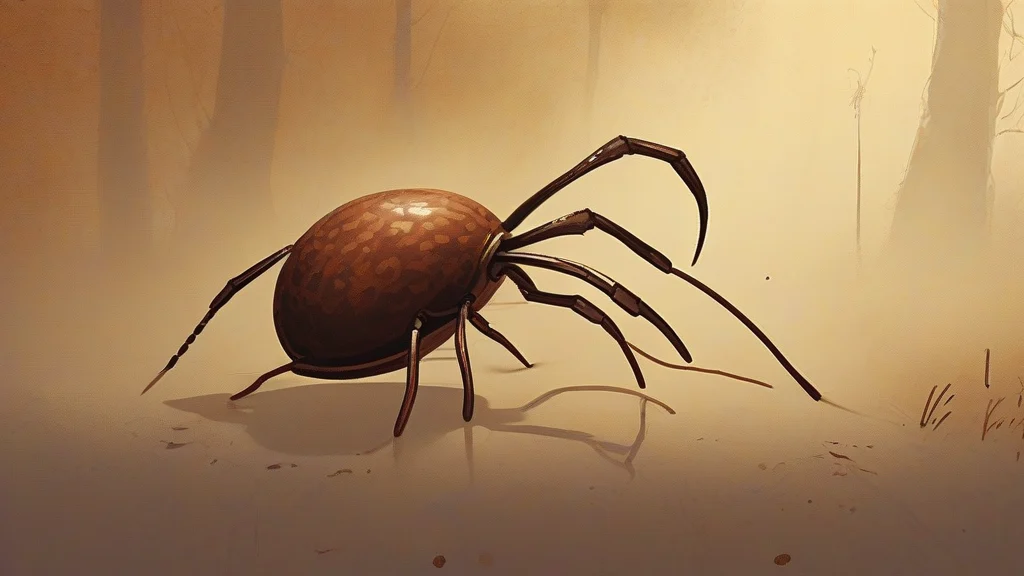
A small parasitic arachnid that feeds on the blood of animals or people; a light, sharp, repeated sound; a small mark indicating that something has been checked or approved; or a very short moment.
"A tick can be hard to see in tall grass, but its bite may leave an itchy spot."
The sound and the brief-time sense are particularly common in everyday speech. The arachnid sense belongs to zoological and medical contexts.
To make a light, sharp, repeated sound; to mark an item with a check or indicate that it has been completed or approved; in British informal use, to approve or accept something; or to continue steadily at a slow pace.
"The old engine ticked over while the driver waited for the ferry."
The approval sense is chiefly British and informal. 'Tick over' is commonly used for machinery, vehicles, organizations, or activities continuing slowly and steadily.
The plural ticks is standard for multiple arachnids, check marks, or brief intervals. The recurring sound itself is usually treated as uncountable, though 'a tick' can refer to one individual sound.
"Several ticks were found on the dog's ears."
Despite its tiny size, a tick is an arachnid, not an insect: like a spider, it has eight legs.
Reviewed by Deb Chak, Editor. AI-assisted content curated by RJS Tech Solutions LLP.
Where does tick come from?
The noun meaning the arachnid comes through Middle English from an Old English Germanic word for a tick. The sound sense also appears in Middle English as an imitative word, reflecting the short, sharp character of the noise it describes. Later uses developed for checking or marking items, and modern British informal senses include approving or accepting something; related forms include tickle, ticklish, and ticker.
Related word forms
How tick is actually used
The pronunciation is the same in British and American English. The use of 'tick' for approval is especially associated with British informal English, while the marking and clock-sound senses are common in both varieties. 'Ticked off' can also mean annoyed in informal British usage.
Easily confused with tick
Tick and tock are complementary sounds used to count seconds: tick refers to one sound or moment, while tock refers to the alternating sound that follows it.