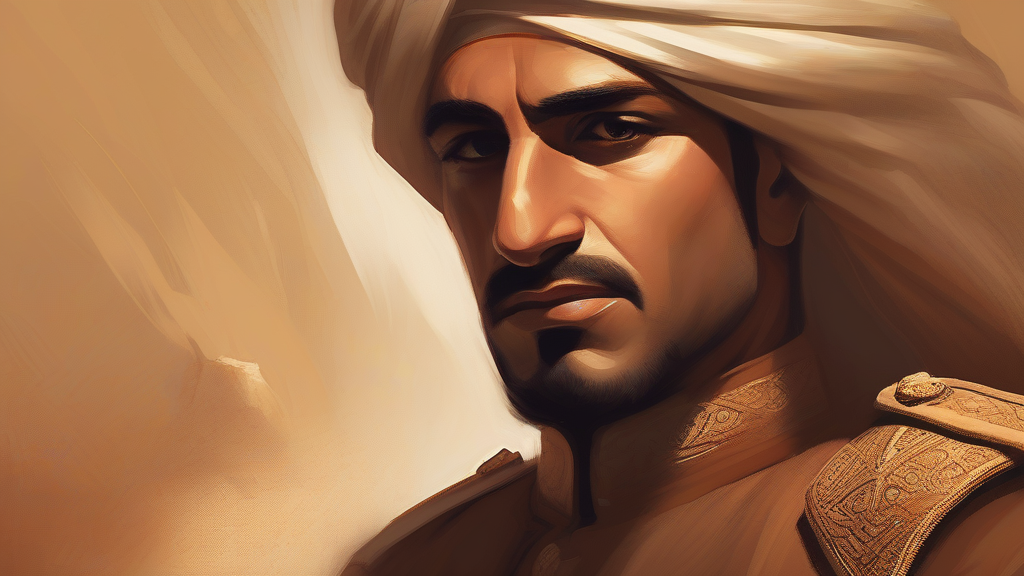
What does amir mean?
An amir is a ruler, commander, or chief holding a title of leadership that originated in the Arabic-speaking Islamic world. The word derives from the Arabic 'amīr', meaning 'commander', and has served for centuries as a designation for sovereign princes, military leaders, and religious authorities alike. In its most familiar modern sense, an amir is the monarch of an emirate — as in Kuwait or Qatar — while historically the title was borne by provincial governors, army commanders, and caliphs styled 'Amir al-Mu'minin', Commander of the Faithful. In English, 'amir' appears alongside the more common variant spelling 'emir'; both render the same Arabic original, with 'amir' reflecting an older transliteration tradition. The word's reach extends surprisingly far: the naval rank of admiral descends from the Arabic 'amīr al-baḥr', commander of the sea, adopted into European usage during the medieval period. Today the term surfaces chiefly in journalism, history, and political commentary concerning the Middle East and Central Asia, where it evokes authority, sovereignty, and the long institutional heritage of Islamic governance.
nounA ruler, commander, or chief in certain Islamic countries; a title of nobility or military leadership historically used across the Muslim world.
- A ruler or sovereign prince of an Islamic state or emirate (e.g. the amir of Kuwait or Qatar).
- A military commander or chieftain bearing the title amir, especially in historical Islamic contexts.
- A religious leader bearing the title, notably 'Amir al-Mu'minin' (Commander of the Faithful), used for caliphs and by some modern Islamist movements.
"The amir of the province received the envoys with great ceremony at his palace."
"Upon his father's death, the young prince was proclaimed amir of the small Gulf state."
"In the chronicles, the amir led his cavalry across the mountains at the head of the army."
The plural follows standard English formation; in scholarly writing about Islamic institutions, the Arabic plural 'umarā'' is occasionally retained.
"Several amirs gathered at the court to swear fealty to the new sultan."
The word 'admiral' — yes, the naval rank — traces straight back to this Arabic title: medieval Europeans borrowed 'amīr-al-baḥr', the 'commander of the seas,' and turned it into one of the most recognizable ranks in any navy today.
Reviewed by Deb Chak, Editor. AI-assisted content curated by RJS Tech Solutions LLP.
Etymology of amir
The word comes from the Arabic 'amīr', meaning 'commander' or 'prince', derived from the verb 'amara', 'to command'. It entered European languages through contact with the Islamic world during the medieval period, appearing in English from around the seventeenth century in forms such as 'amir', 'emir', and 'ameer'. A notable cognate is the naval rank 'admiral', which developed from the Arabic compound 'amīr al-baḥr', 'commander of the sea', transmitted to Europe through Mediterranean maritime usage.
Related word forms
How amir is actually used
The spelling 'amir' coexists with the more common 'emir'; both transliterate the same Arabic word 'amīr'. The term carries connotations of authority, sovereignty, and Islamic political tradition. In modern usage it most often appears in news and historical writing about the Middle East and Central Asia.
Easily confused with amir
Emir is the more common English spelling and form of the same Arabic title (amīr); 'amir' often reflects an older or alternative transliteration, but both denote the same rank.
Admiral is a naval officer rank in Western navies; it derives historically from the same Arabic root ('amīr al-baḥr', commander of the sea) but refers to a modern naval command rather than a sovereign or regional ruler.