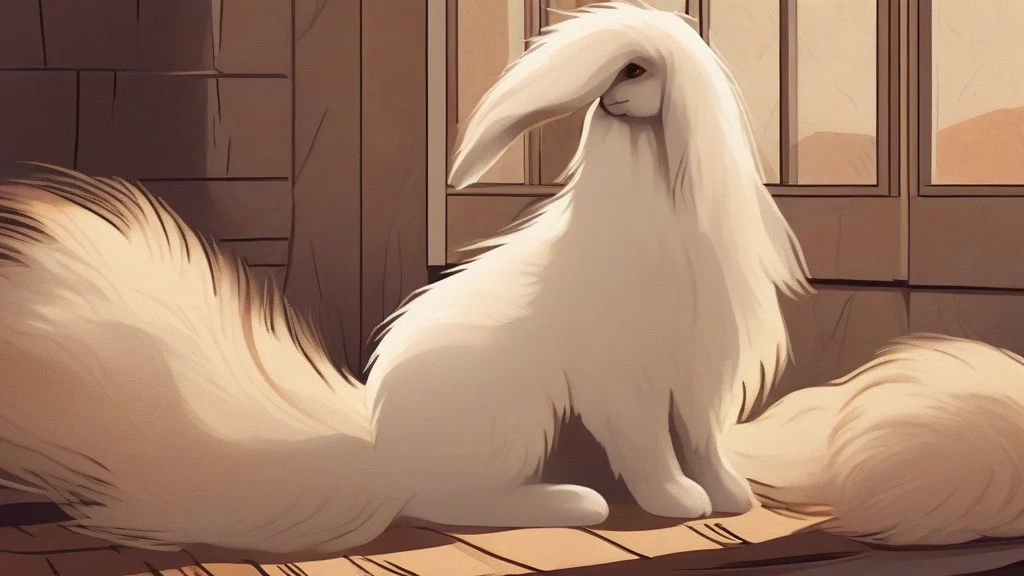
What does angora mean?
Angora is a noun referring primarily to the soft, fine wool harvested from the Angora rabbit, prized for its exceptional warmth, lightness, and characteristic fluffy halo. It also names garments knitted from this fibre, most commonly sweaters, and extends by association to breeds originating near Ankara, Turkey — historically called Angora — such as the Angora goat, Angora cat, and Angora rabbit itself. In everyday usage the word carries connotations of luxury and softness, sitting alongside cashmere and mohair among premium natural fibres, though careful speakers distinguish angora (rabbit down) from mohair (goat fleece). The word entered English in the early nineteenth century, when trade in these Turkish textiles flourished. Today angora appears most often in fashion, knitting, and retail contexts, where its plush texture makes it instantly recognisable, even as ethical concerns have led some brands to limit its use.
The soft wool or yarn obtained from the Angora rabbit, used in knitwear; also a garment made from this fibre.
"He bought her a pale-blue angora cardigan for her birthday."
Strictly, angora refers to rabbit fibre; Angora goat fleece is called mohair.
Of or relating to Ankara (formerly Angora), Turkey, especially describing the Angora breeds of goat, rabbit, and cat.
"The Angora goat was bred for its lustrous mohair fleece."
Usually capitalised when used as a breed designation.
The plural typically refers to multiple garments made of angora, or occasionally to multiple Angora-breed animals.
"The shop window displayed angoras in every pastel shade."
Angora doesn't come from goats at all — true angora wool is plucked from a rabbit, while the goat's fleece goes by a completely different name: mohair.
Reviewed by Deb Chak, Editor. AI-assisted content curated by RJS Tech Solutions LLP.
Etymology of angora
The word angora comes from Angora, the former name of Ankara, the capital of Turkey, a city long famous for its long-haired animals and luxurious fleeces. English adopted the term in the early nineteenth century through the textile trade, applying it first to the region's celebrated goat wool and later specifically to the finer down of the Angora rabbit. The closely related word mohair derives from the Arabic 'mukhayyar' (fine cloth) via Italian, and came to name the fleece of the Angora goat specifically. The city's modern Turkish name, Ankara, preserves the same root from which angora descends.
How angora is actually used
In the textile trade, 'angora' strictly denotes rabbit fibre; fibre from the Angora goat is always sold as mohair, though older texts sometimes blur the two. Because of animal-welfare concerns around commercial rabbit-fibre harvesting, some retailers have moved away from angora in recent years. When used attributively before an animal breed ('Angora goat', 'Angora cat'), it is often capitalised as a proper adjective.
Easily confused with angora
Mohair is the silky fleece of the Angora goat, whereas angora proper is the softer down of the Angora rabbit.
Cashmere comes from the undercoat of the cashmere goat, while angora comes from rabbits (or, loosely, from Angora goats).