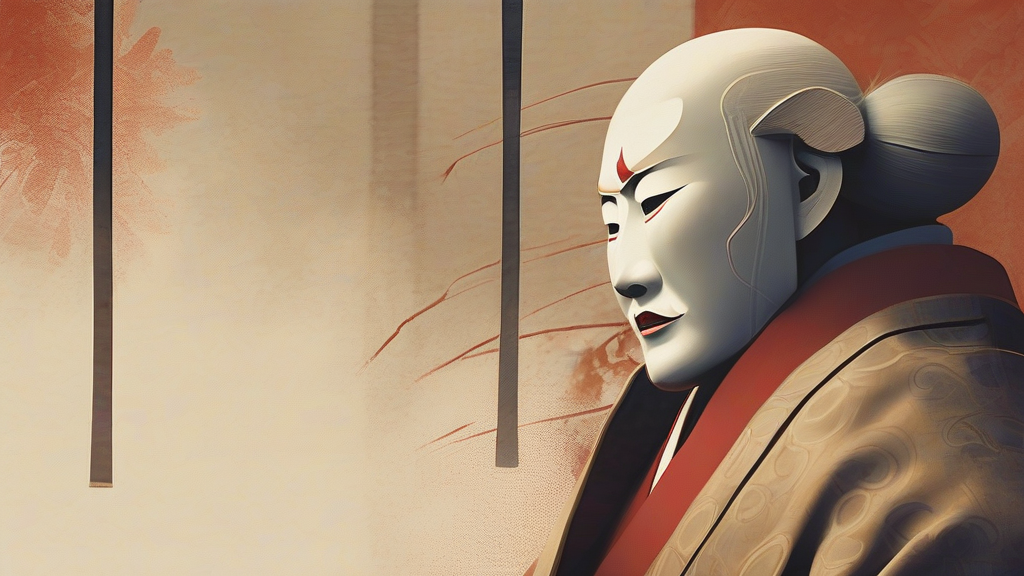
What does bunraku mean?
Bunraku is a classical Japanese form of puppet theatre in which nearly life-sized puppets are brought to life on stage by teams of three visible puppeteers dressed in black. Each puppet requires close coordination: one master puppeteer controls the head and right hand, a second operates the left hand, and a third moves the legs. Unlike Western traditions that conceal their operators, bunraku makes the puppeteers an accepted part of the spectacle, with the chief puppeteer's uncovered face signaling his rank. Performances are driven by gidayū-bushi — a chanted narration delivered by a single reciter — accompanied by the shamisen, a three-stringed lute. The art flourished in Osaka during the Edo period, reaching its peak through the playwright Chikamatsu Monzaemon, and was inscribed on UNESCO's Intangible Cultural Heritage list in 2003. Today it remains one of Japan's most revered theatrical forms alongside kabuki and noh.
nounA traditional Japanese form of puppet theatre in which large, highly articulated puppets are operated on stage by visible puppeteers, accompanied by narrated chanting and shamisen music.
- The traditional Japanese art of puppet theatre featuring large puppets operated by visible puppeteers, chanted narration (gidayū), and shamisen accompaniment.
- A specific performance or work presented in this style.
"The troupe's performance of bunraku left the audience marveling at the puppeteers' synchronized precision."
"UNESCO recognized bunraku as an Intangible Cultural Heritage of Humanity in 2003."
"She studied bunraku for years before attempting to coordinate all three puppeteers in a single scene."
Bunraku is an invariant noun borrowed from Japanese; it does not take a plural -s ending. A plural sense is expressed as 'several bunraku performances' or 'various bunraku productions'.
"The festival featured several bunraku from different regional troupes."
In bunraku, the master puppeteer appears on stage in full view of the audience — his face exposed as the only performer allowed to show himself — and audiences consider this invisibility-by-convention part of the art's genius.
Reviewed by Deb Chak, Editor. AI-assisted content curated by RJS Tech Solutions LLP.
Etymology of bunraku
Bunraku takes its name from Uemura Bunrakuken, a late 18th-century Japanese puppeteer whose troupe popularized the art form; his name combines 'Bunraku' (from characters meaning 'literature' or 'culture' and 'pleasure' or 'entertainment') with the honorific '-ken'. The theatre itself is much older, descending from ningyo jōruri — puppet plays accompanied by chanted ballads — which developed in early 17th-century Japan. Although the older term ningyo jōruri remains in formal use, 'bunraku' became the common name both in Japanese and internationally after the Bunraku-za theatre company established itself in Osaka.
How bunraku is actually used
The word functions as an uncountable mass noun when referring to the art form ('a tradition of bunraku') but can take the indefinite article when referring to a single performance ('a bunraku'). It is typically set in roman type without italics in modern English usage. The term is strongly associated with Osaka, the historical home of the art.
Easily confused with bunraku
Kabuki is Japanese theatre performed by live actors with elaborate makeup, whereas bunraku is performed with puppets manipulated by visible puppeteers.
A marionette is a puppet suspended and moved by strings from above, while bunraku puppets are handled directly by puppeteers who stand in view of the audience.