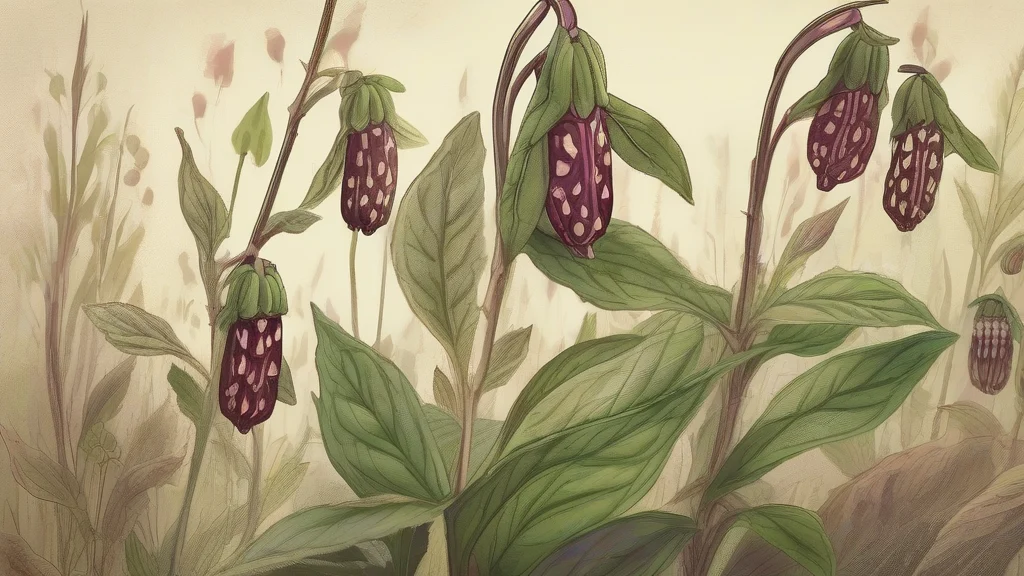
What does comfrey mean?
Comfrey is a perennial herb belonging to the genus Symphytum in the borage family, Boraginaceae. Native to Europe and parts of Asia, it grows readily in damp meadows and along riverbanks, producing broad, hairy leaves and clusters of small, bell-shaped flowers that range from white to deep purple. For centuries the plant has been valued in folk medicine under the old name 'knitbone,' as poultices made from its leaves and roots were traditionally applied to bruises, sprains, and fractures in the belief that they speeded healing. The roots contain allantoin, a compound still studied for its effects on skin repair. In modern usage the word appears chiefly in gardening, herbalism, and natural-remedy writing, since internal use of comfrey is now restricted in many countries due to liver-toxic compounds called pyrrolizidine alkaloids. Gardeners also prize it as a compost accelerator and liquid feed, making comfrey a word equally at home in the medicine cabinet and the garden shed.
nounA perennial herb of the genus Symphytum (family Boraginaceae), having hairy leaves and small bell-shaped flowers, long used in traditional medicine as a poultice for healing wounds and broken bones.
- The perennial herb Symphytum officinale, used in herbal medicine and gardening.
"She brewed a poultice of comfrey root to soothe the gardener's sprained wrist."
"The herbalist applied a salve made from comfrey to the bruise."
"Comfrey thrives in the damp corner of the garden, its broad leaves shading out the weeds."
Rarely used; the word usually refers to the plant generically or in the singular.
"Several comfreys self-seeded along the stream bank."
Comfrey's old folk name was 'knitbone' because healers believed its roots could literally help mend broken bones.
Reviewed by Deb Chak, Editor. AI-assisted content curated by RJS Tech Solutions LLP.
Etymology of comfrey
Comfrey entered English via Anglo-Norman French forms such as cumfirie, ultimately derived from medieval Latin conferva, a term used for certain water plants and healing herbs. The underlying sense relates to the Latin verb confervēre, meaning 'to boil together' or 'to grow thickly.' Its folk synonym 'knitbone' reflects the plant's long association with bone-healing in European herbal tradition.
How comfrey is actually used
Mostly encountered in contexts of herbal medicine, gardening, and traditional remedies rather than everyday conversation.
Easily confused with comfrey
Borage is a different herb in the same family (Boraginaceae) with blue star-shaped flowers, whereas comfrey has bell-shaped purple, pink, or white flowers and larger, rough leaves.