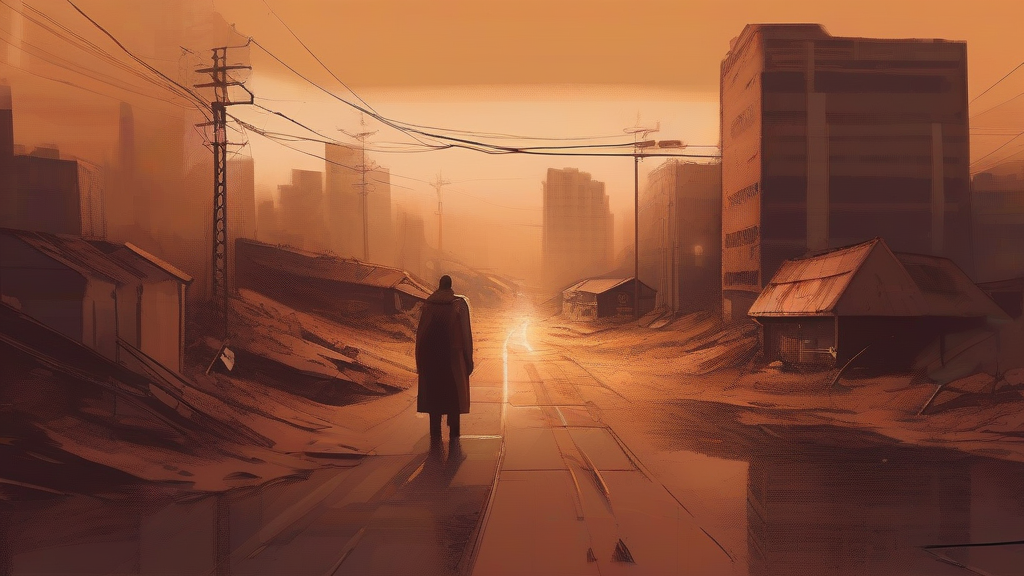
What does dystopian mean?
'Dystopian' is an adjective describing an imagined place, society, or future state in which conditions are deeply unpleasant, oppressive, or degraded — typically marked by totalitarian control, environmental collapse, or widespread suffering. It is most often used to discuss fiction: novels, films, and games set in nightmarish worlds such as those imagined by George Orwell or Margaret Atwood are called 'dystopian fiction'. The word also extends figuratively to real-world situations that feel grim or oppressive enough to resemble such fictional nightmares, as when journalists describe a polluted skyline or heavy-handed government policy as 'dystopian'. Coined from Greek roots meaning 'bad place', it stands as the direct opposite of 'utopian'. Because it packs a vivid sense of dread into a single word, 'dystopian' has become one of the most recognisable terms in modern cultural and political vocabulary, useful both for analysing literature and for critiquing contemporary life with rhetorical force.
Relating to or characteristic of a dystopia; describing an imagined society marked by oppression, misery, or injustice.
"She won acclaim for her dystopian novel about a world where water is rationed by the state."
Frequently applied to genres of fiction, but increasingly extended to describe real-world conditions metaphorically.
A person who holds a pessimistic view of the future, expecting things to turn out badly rather than well.
"In the debate between optimists and pessimists, he firmly positioned himself as a dystopian."
Less common than the adjective form; usually found in discussions of futurology or social commentary.
Used only for the rare noun sense referring to people with pessimistic views of the future.
"Techno-dystopians warn that artificial intelligence could entrench inequality beyond repair."
The word 'dystopia' was coined as the exact opposite of 'utopia' — literally meaning 'bad place' — yet dystopian fiction has become one of the most popular genres of modern storytelling.
Reviewed by Deb Chak, Editor. AI-assisted content curated by RJS Tech Solutions LLP.
Etymology of dystopian
'Dystopian' derives from 'dystopia', a term formed from the Greek prefix 'dys-' meaning bad or abnormal, combined with '-topia' from Greek 'topos' meaning place. It was deliberately coined as the antonym of Thomas More's 'utopia' (1516), which itself blends Greek elements meaning 'no place' or 'good place'. The word entered English usage in the mid-twentieth century as dystopian fiction became a prominent literary genre, though related forms appeared somewhat earlier.
Related word forms
How dystopian is actually used
'Dystopian' is most common in literary criticism, film discussion, and political commentary. When applied to real-world events, it carries a strong rhetorical force, suggesting that reality has come to resemble a nightmare from fiction.
Easily confused with dystopian
'Utopian' describes an imagined ideal and perfect society, while 'dystopian' describes an imagined society that is unpleasant, oppressive, or degraded.