
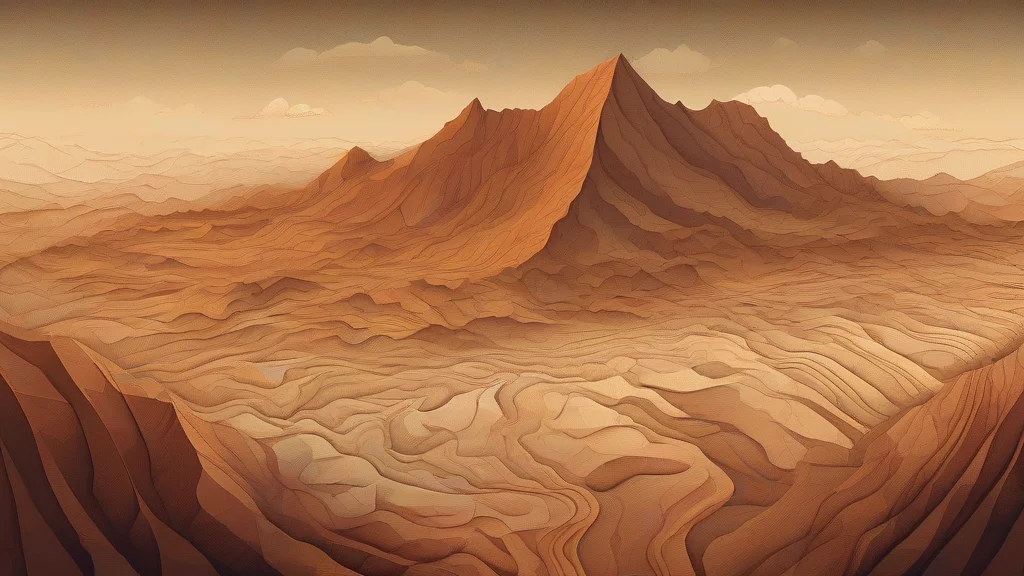
What does topography mean?
Topography is the study or description of the physical shape and arrangement of a place or surface. It includes features such as hills, valleys, plateaus, slopes, waterways, and the relative elevation of the land, and it may be recorded through maps, surveys, or written description. The word comes especially from geography, geology, cartography, and military analysis, but it can also be used more broadly for the detailed organization of a visual or physical surface. For example, writers may discuss the topography of a landscape, the topography of a city, or the topography of a painting. Topography is more specific than “landscape” when attention is directed toward the configuration and elevation of the terrain. It is also more technical than ordinary descriptions of an area's appearance. In contemporary writing, the term can suggest close attention to structure: topography is not simply what a place looks like, but the pattern by which its features are arranged.
nounThe physical features and arrangement of a landscape or other surface, especially its landforms, elevation, and relief. In extended use, it refers to the detailed layout or structure of a place, system, or surface.
- The physical features and configuration of a landscape or region, including its relief, elevation, and landforms.
- The detailed arrangement of features on a surface, as represented on a map or considered in fields such as geology, art, or anatomy.
"The region's rugged topography made the journey slow and difficult."
"The map's topography shows how the river winds through the mountains."
"Her research in urban design examines the topography of public spaces and the way people move through them."
The regular plural refers to separate mappings, descriptions, or configurations of terrain or other surfaces.
"The atlas compares the topographies of the two coastal regions."
A map may show streets; topography shows the land's bones—its hills, valleys, and ridges.
Reviewed by Deb Chak, Editor. AI-assisted content curated by RJS Tech Solutions LLP.
Where does topography come from?
Topography comes from Greek topē, meaning “place,” and graphein, meaning “to write.” These elements passed through Latin as topographia, a term for the description or mapping of a place, and entered English in the 16th century. Its related English forms—topographic, topographical, and topographer—continue to express the same combination of place description and written or mapped representation.
Related word forms
How topography is actually used
Topography is formal and technical in scientific, geographic, surveying, and military contexts. In extended artistic or analytical contexts, it can describe the visual or conceptual layout of a surface or system.
Easily confused with topography
Topography describes the physical layout of a landscape or surface, whereas topology describes the arrangement of connected elements in a system.
Geography is the broad study of places and the relationships between people and their environments, while topography focuses specifically on physical features and the form of the land.