
What does terrain mean?
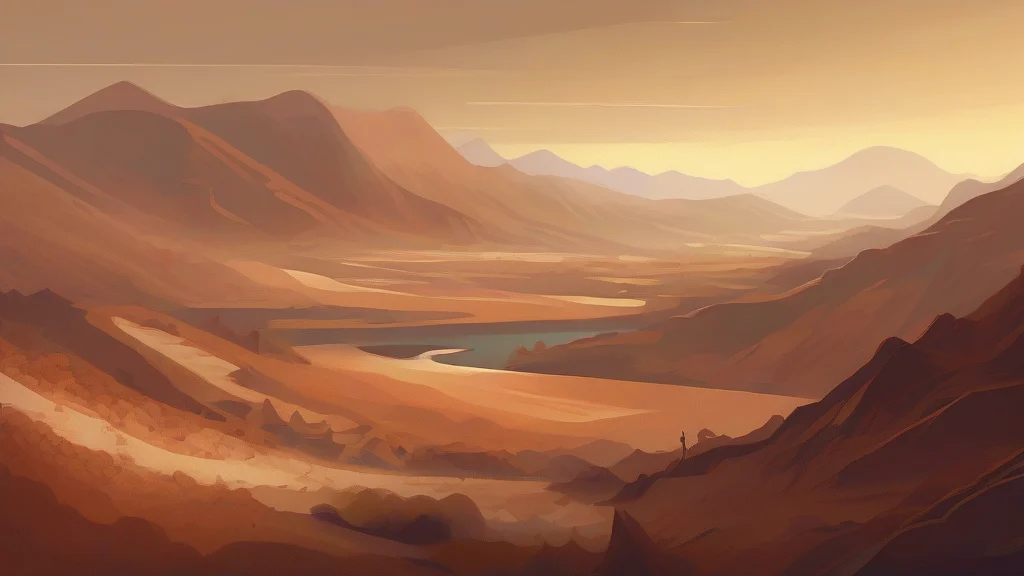
Terrain means land or ground considered in terms of its physical form and characteristics. The word is especially useful when elevation, steepness, vegetation, natural obstacles, or the general shape of the land matters, as in descriptions of travel, warfare, agriculture, or geography. A speaker might refer to flat, mountainous, rough, or difficult terrain, or to the terrain of a particular region. Terrain can also describe the ground itself in contexts where its physical features influence movement or use. In figurative language, it refers to a field of activity or a complex subject that must be navigated, as in "political terrain" or "the terrain of public debate." Compared with the broader word "land," terrain draws attention to the configuration and practical qualities of the ground. It is a precise and expressive term because it treats landscape not merely as territory, but as a physical environment with features that shape what people and vehicles can do.
nounA tract of land considered in terms of its physical features, such as elevation, shape, and the presence of natural obstacles. By extension, it can refer to a domain or field of activity.
- Land or ground considered with reference to its physical features and how they affect movement, settlement, or use.
- A distinct area, region, or tract of land.
- A figurative domain or field of activity, especially one regarded as difficult to navigate.
"The narrow mountain terrain made travel by vehicle impossible."
"Heavy rain turned the normally dry terrain into a maze of mud and flooded channels."
"The negotiations entered difficult political terrain as both sides refused to compromise."
Terrain is often used as a mass noun. The plural "terrains" is appropriate when referring to distinct areas or contrasting forms of land.
"The survey identified several distinct terrains, from marshland to steep rocky slopes."
Terrain comes from the word for earth: it is the ground beneath your feet, understood in all its hills, hollows, and difficulties.
Reviewed by Deb Chak, Editor. AI-assisted content curated by RJS Tech Solutions LLP.
Where does terrain come from?
The word was borrowed into English from French terrain in the early 17th century. Its ultimate source is Latin terra, meaning "earth" or "soil," through a Latin or Medieval Latin form meaning ground or land. English later extended the word from earth and ground to the physical features of an area and, more recently, to figurative fields of activity. The same Latin root underlies cognates such as terrestrial, terrace, and terrarium.
How terrain is actually used
Terrain is standard in geography, travel, military contexts, and environmental writing. It is often more technical than the general word "ground," particularly when emphasizing elevation, relief, or natural obstacles. The figurative sense is established but is usually used for a domain in which movement or negotiation is difficult.