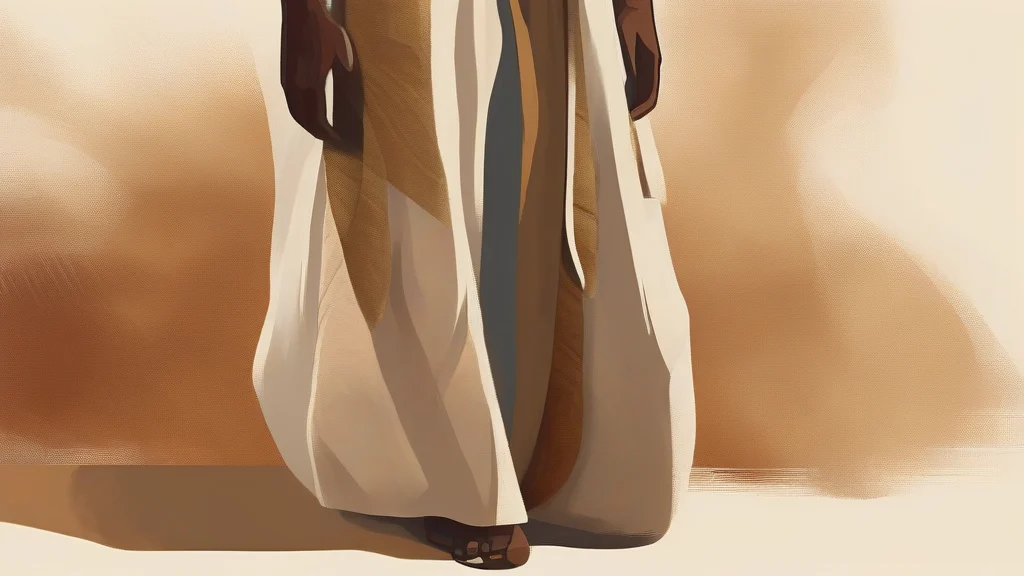
What does aba mean?
An aba is a heavy, coarse fabric woven from camel's or goat's hair, and by extension the loose, sleeveless outer robe traditionally made from it. The cloth is prized for its durability and its ability to protect the wearer from both heat and cold, which made it a staple of everyday dress among Bedouin and other communities of the Middle East. In English, the word appears chiefly in historical, ethnographic, and literary contexts rather than in ordinary conversation, so encountering it usually signals writing about traditional dress or textiles. The term entered English from Arabic via French in the seventeenth century, and it survives most visibly today in 'abaya', the flowing robe still widely worn by women in many Arab countries. Though uncommon in modern usage, 'aba' remains useful precisely when precision about traditional garments matters.
A heavy fabric woven from camel's or goat's hair.
"The tailor recommended durable aba for the winter coat."
Often used attributively, as in 'aba cloth'.
A loose sleeveless cloak or outer robe made of such fabric, traditionally worn in the Middle East.
"Villagers wore simple abas against the dust and sun."
Standard plural, formed regularly with -s.
"The market stalls displayed abas in every shade of brown and grey."
The word 'aba' has travelled from Arabic into English twice over — once as the fabric itself, and once hidden inside 'abayas', the flowing robes still worn across the Middle East today.
Reviewed by Deb Chak, Editor. AI-assisted content curated by RJS Tech Solutions LLP.
Etymology of aba
The word 'aba' comes from the Arabic 'ʿabāʾ' (عباءة), meaning a coarse woollen cloth or the garment made from it. It passed into European languages through French, entering English in the early modern period. Its most prominent living relative in English is 'abaya', the long loose robe worn by women in much of the Arab world, which derives from the same Arabic root.
How aba is actually used
A rare, largely historical term found mainly in dictionaries, ethnographic writing, and discussions of traditional Middle Eastern dress. It may refer either to the textile itself or to a garment made from it.
Easily confused with aba
Abaca is Manila hemp, a fibre from a species of banana plant used for ropes and paper, whereas aba is a coarse camel- or goat-hair fabric or the cloak made from it.