
What does lava mean?
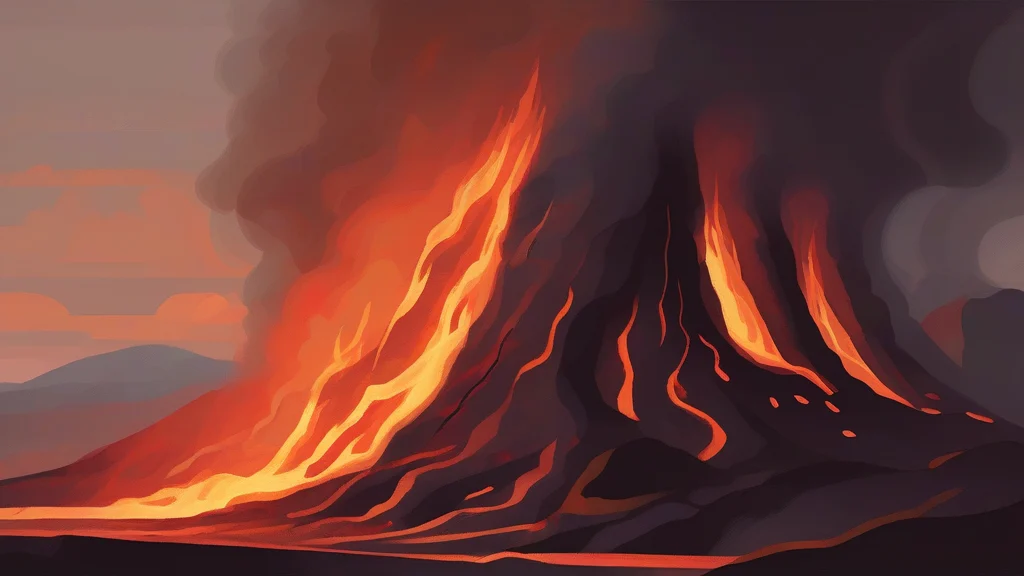
Lava is the term for molten rock that has reached the Earth's surface, often through a volcanic eruption. When it is underground, molten rock is called magma; once it emerges and flows across the landscape, it is lava. Lava can form dramatic features such as flows, fields, and tubes as it cools and solidifies. The word is also used figuratively for a great surging quantity or movement of people, money, words, or other things, as in “a river of lava.” In scientific writing, the term specifically denotes molten rock rather than the solid rock formed after it cools. Lava is especially associated with volcanic activity, but it can also occur during lava fountains, fissure eruptions, and other eruptions where molten material reaches the surface. Its vivid imagery and connection with heat, motion, and geological force make it both a precise scientific term and a widely understood metaphor.
nounMolten rock that erupts from a volcano or forms when molten rock is exposed at the Earth's surface. By extension, the word can refer to a surging mass or flow of people, money, or words.
- Molten rock emitted by a volcanic eruption or exposed at the Earth's surface.
- A figurative mass or flow, especially of people, money, or words.
"The eruption sent rivers of lava flowing down the mountainside."
"Thick lava blocked the road and forced the vehicles to turn back."
"The website became a lava of comments after the controversial announcement."
The plural is uncommon; “lava” is normally used as a mass noun, and plural forms such as “lava flows” are often more natural.
"Geologists compared the lavas erupted by the volcano over several centuries."
Lava begins underground as magma, but its name comes from the Latin word for broken ground—the landscape over which it has flowed.
Reviewed by Deb Chak, Editor. AI-assisted content curated by RJS Tech Solutions LLP.
Where does lava come from?
The word entered English in the 17th century from Italian lava. Italian borrowed it from Latin lava, an old term associated with broken ground or a ravine. The geological sense developed as volcanology developed, with the modern contrast between underground magma and surface lava becoming established later.
How lava is actually used
In geology, magma refers to molten rock beneath the Earth's surface, while lava refers to molten rock at or near the surface. The figurative use is informal and usually suggests a powerful, uncontrolled surge.