What does abacus mean?
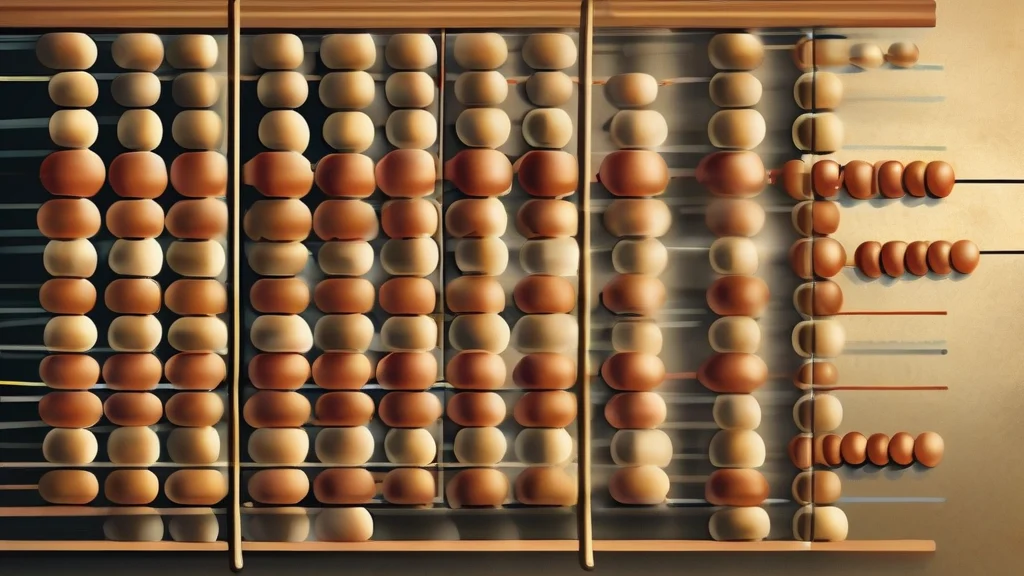
An abacus is a manual calculating device made up of a frame holding rods or wires on which beads are slid back and forth to represent numbers. By moving the beads according to fixed rules, a user can add, subtract, multiply, divide, and perform other computations without written figures or electronics. Versions of the abacus arose independently across many cultures, including Mesopotamia, Egypt, Greece, Rome, China, and Japan, and it served as the principal everyday calculating tool for merchants and clerks for centuries before mechanical and electronic calculators displaced it. In some regions it remains in practical use, and elsewhere it survives as a teaching aid that helps children grasp place value and mental arithmetic. Figuratively, the word occasionally evokes old-fashioned or painstaking calculation. Its enduring presence makes it both a functional instrument and a symbol of early human ingenuity in mathematics.
nounA counting frame consisting of rows of beads or discs that slide along rods or wires, used for performing arithmetic by hand. It was widely used across the ancient world and remains in use as a calculating tool, particularly in parts of Asia.
- A hand-operated counting frame with sliding beads used for arithmetic.
"The shopkeeper calculated the total on her abacus faster than the clerk could reach for a calculator."
"Children in the math class learned addition by moving beads across the abacus."
"Ancient Roman traders recorded their accounts on a grooved abacus rather than on paper ledgers."
Both "abacuses" and the Latinate "abaci" are accepted plurals; "abacuses" is the more common choice in general modern usage, while "abaci" tends to appear in scholarly or deliberately classical contexts.
"The museum's collection includes several ancient abacuses from different civilizations."
Long before calculators, merchants added up fortunes by flicking beads along wooden rods — and skilled abacus users can still outpace a person punching numbers into a calculator.
Reviewed by Deb Chak, Editor. AI-assisted content curated by RJS Tech Solutions LLP.
Etymology of abacus
The word "abacus" entered English in the late Middle Ages via Latin, which borrowed it from Greek "ábax," meaning a flat slab or counting board. Some scholars further connect the Greek term to a Semitic source such as Hebrew "ābāq," meaning dust, alluding to the practice of scattering sand on a board to trace calculations. A rare related form, "abaque," survives in specialized architectural and artistic vocabulary.
How abacus is actually used
The word is standard and neutral in register. It appears most often in historical, educational, and cultural contexts describing arithmetic tools, especially those of East Asian, Middle Eastern, or classical Mediterranean origin.
Easily confused with abacus
"Abaca" is a plant native to the Philippines whose fiber yields Manila hemp, while an "abacus" is a counting frame used for arithmetic.