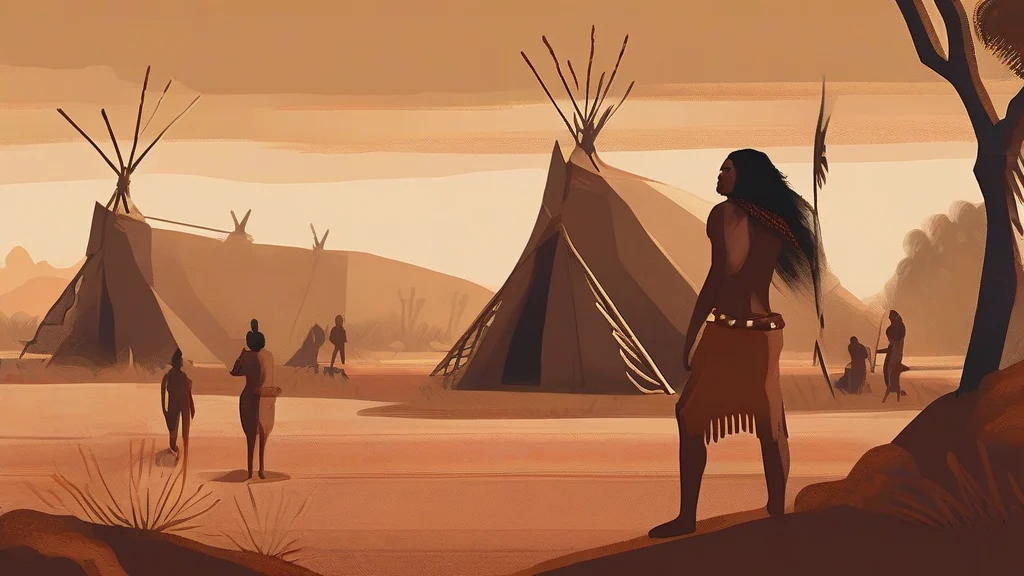
What does aborigine mean?
An aborigine is a member of the people who originally inhabited a land, and the term is most closely associated with the Indigenous peoples of Australia. Its roots lie in the Latin expression 'ab origine', meaning 'from the beginning', which ancient Romans applied to their own earliest inhabitants; English adopted the word in the early modern period and later extended it to indigenous peoples encountered around the world. In contemporary usage, however, the word carries significant caveats: in Australia it is widely regarded as dated and potentially offensive, with 'Aboriginal' and 'Torres Strait Islander peoples' now preferred, particularly when naming specific nations and language groups. Elsewhere, 'aborigine' survives mainly in historical, anthropological, or general contexts describing the first known inhabitants of a region. Related forms include the adjective 'aboriginal' and the adverb 'aboriginally'. Anyone using the word today should weigh its colonial history against more precise, respectful alternatives.
nounAn aborigine is a member of the people who were the original inhabitants of a land, especially an indigenous inhabitant of Australia. The term derives from the Latin phrase meaning 'from the beginning'.
- A member of the indigenous people of Australia.
- More generally, any member of the original or earliest known inhabitants of a region.
"The museum's new exhibit traces the art and culture of the Australian aborigines over tens of thousands of years."
"The aborigines of Tasmania developed distinct cultural practices shaped by their island environment."
"Long before European contact, the aborigines had established sophisticated systems of land management."
The standard plural adds -es. Note that in Australian usage the plural is also avoided for the same reasons as the singular.
"The rock art was created by aborigines thousands of years before European arrival."
The word 'aborigine' comes from Latin 'ab origine' — literally 'from the origin' — and was used by ancient Romans to describe their own earliest inhabitants before it ever reached Australia.
Reviewed by Deb Chak, Editor. AI-assisted content curated by RJS Tech Solutions LLP.
Etymology of aborigine
The word comes from the Latin phrase 'ab origine', meaning 'from the origin' or 'from the beginning', which the Romans used of the earliest legendary inhabitants of Italy. English adopted 'aborigine' in the early 17th century, initially in reference to the original inhabitants of any country, and it was later applied specifically to the Indigenous peoples of Australia from the late 18th century onward. It shares this Latin root with the adjective 'aboriginal' and the adverb 'aboriginally', while the broader concept of original inhabitants connects it to terms like 'indigenous' and 'autochthonous', though these derive from different linguistic sources.
Related word forms
How aborigine is actually used
In Australia, the terms 'Aboriginal' and 'Torres Strait Islander' are now strongly preferred over 'aborigine', which many consider dated or offensive; 'Aborigine' (capitalised) has been used as a formal collective noun but is increasingly avoided in favour of specific group names. Outside Australia, the word retains its broader sense of any original inhabitant. Use with care and awareness of local sensitivities.
Easily confused with aborigine
'Aboriginal' is primarily an adjective describing something relating to the original inhabitants, while 'aborigine' is the noun referring to such a person.