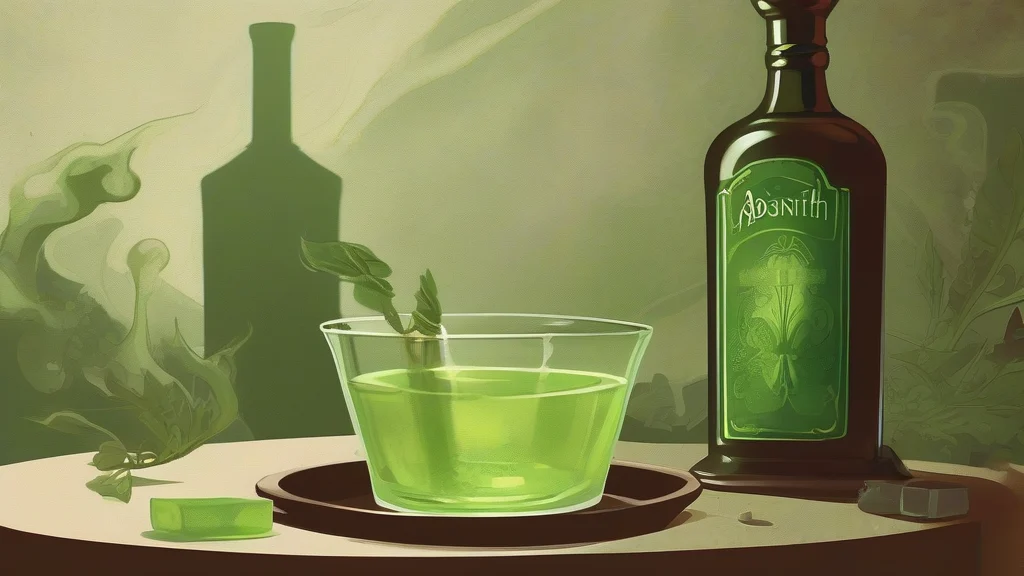
What does absinth mean?
Absinth is a variant spelling of absinthe, the famously bitter, vividly green spirit flavoured with anise, fennel, and wormwood (Artemisia absinthium). Distilled originally for medicinal purposes in Switzerland in the late eighteenth century, it became enormously popular in nineteenth-century France, where drinkers ritually diluted it with cold water and sugar, turning the clear spirit cloudy and pale green. Because of its high alcohol content and the presence of thujone from wormwood, it acquired a lurid reputation for causing hallucinations and insanity, earning the nickname "la fée verte" — the green fairy — and leading to bans across much of Europe and America by the early twentieth century. Modern research has largely debunked these claims, and the drink is legal again in most countries. Today the word evokes bohemian Paris, avant-garde art, and a certain romantic decadence, making it as much a cultural symbol as a beverage.
nounA variant spelling of absinthe: a bitter green anise-flavoured spirit distilled from wormwood and other herbs, or the wormwood plant itself.
- A strong, bitter green anise-flavoured liqueur distilled from wormwood (Artemisia absinthium) and other herbs.
- The wormwood plant itself, Artemisia absinthium.
"The bartender carefully dripped ice water into a glass of absinth until it clouded to a pale opalescent green."
"In fin-de-siècle Paris, artists and poets made a ritual of diluting absinth with sugar and cold water."
"Wormwood — the source of absinth — has been used in herbal medicine since antiquity."
Rarely pluralised; the uncountable form is standard when referring to the drink, though the plural can appear when distinguishing varieties or brands.
"The shop stocked several Czech absinths alongside the traditional French style."
Nicknamed 'the green fairy,' this wormwood spirit was banned in France and much of Europe for decades after being blamed for hallucinations and madness.
Reviewed by Deb Chak, Editor. AI-assisted content curated by RJS Tech Solutions LLP.
Etymology of absinth
The word derives from the Greek "apsinthion" (or "apsinthos"), meaning wormwood, which passed into Latin as "absinthium." English adopted the term via French "absinthe," with the spelling "absinth" reflecting the older Latin form more directly. The ultimate origin may lie in Persian, though this is uncertain. The same Latin root survives in the botanical name Artemisia absinthium, the species of wormwood used to flavour the spirit.
How absinth is actually used
"Absinth" is a less common variant spelling than "absinthe," which is now the standard form in English. The word carries connotations of decadence, bohemian artistic culture, and fin-de-siècle Europe, partly because of its historical association with writers and painters and its long bans in several countries during the early twentieth century.
Easily confused with absinth
Absinthe is the standard modern spelling of the spirit, while absinth is an older or continental European variant spelling referring to the same drink.