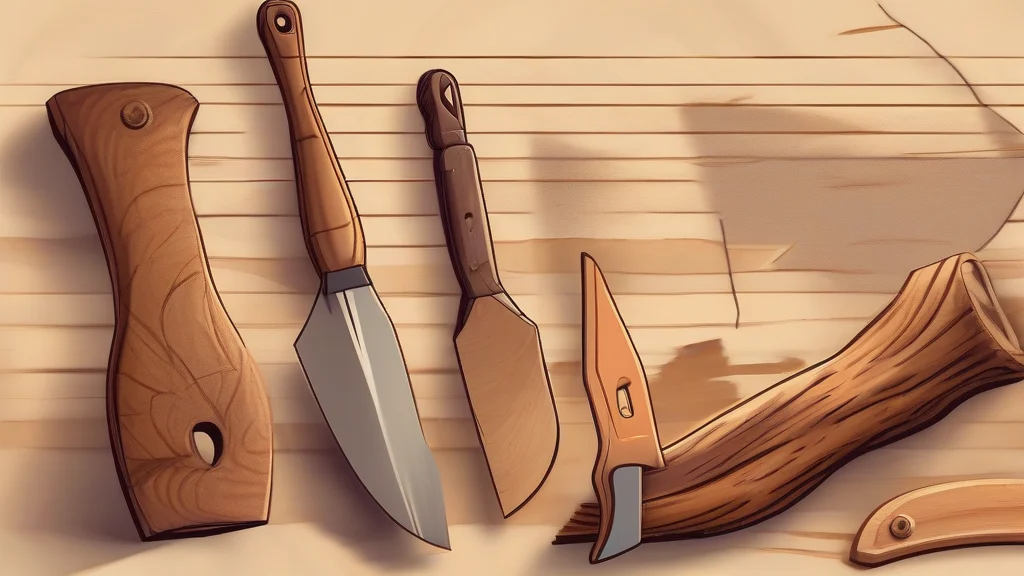
What does adz mean?
An adz is a hand tool used in woodworking, consisting of a curved cutting blade mounted at a right angle to a wooden handle. Unlike an axe, whose edge runs parallel to the handle, the adz's perpendicular blade allows the user to shave thin layers from a surface — making it ideal for smoothing rough timber, hollowing out logs, and shaping curved pieces such as bowls, troughs, and ship planks. The woodworker typically swings it downward in controlled strokes, often standing astride the workpiece. The word is closely associated with traditional crafts such as shipbuilding and coopering, where it was indispensable long before mechanized planing existed. In contemporary English, "adz" appears mainly in American texts, while British writers favor the spelling "adze." Though rarely used outside specialist trades today, the term survives as a marker of skilled manual craftsmanship and frequently surfaces in historical, archaeological, and nautical writing.
A woodworking tool with a curved blade set at right angles to the handle, used for shaping and dressing timber.
"The carpenter trimmed the door frame with an adz."
Chiefly the American spelling; British English prefers "adze."
To shape or dress timber using an adz.
"They adzed the beams until every surface was smooth."
Less common than the noun; usually encountered in descriptions of traditional woodworking.
The standard plural simply adds -es. Note that this plural is identical in sound to the unrelated words "adds" and "ads," which can cause confusion in speech.
"The workshop displayed a collection of antique adzes from the eighteenth century."
Before power tools existed, entire ships were built plank by plank — each one shaped smooth by hand with nothing more than an adz.
Reviewed by Deb Chak, Editor. AI-assisted content curated by RJS Tech Solutions LLP.
Etymology of adz
The word derives from Old English "adesa," a term of Germanic origin whose further ancestry remains uncertain. It has cognates in other West Germanic languages, including Middle Low German and Dutch forms referring to the same tool. The spelling "adz" arose as a variant of "adze," which itself reflects the loss of the original final vowel in pronunciation; both spellings have been current since around the seventeenth century, with "adze" now dominant in British English and "adz" common in American English.
How adz is actually used
"Adz" is chiefly the American spelling; British usage strongly prefers "adze." The word is most common in contexts involving traditional woodworking, boatbuilding, carpentry, and historical craft, and it carries a slightly old-fashioned, artisanal connotation in modern writing.
Easily confused with adz
"Adds" is the third-person singular form of the verb "add," meaning to put something with something else, whereas an adz is a woodworking tool.
"Ads" is the plural of "advertisement," while an adz is a curved-bladed tool used to shape wood.