What does adzed mean?
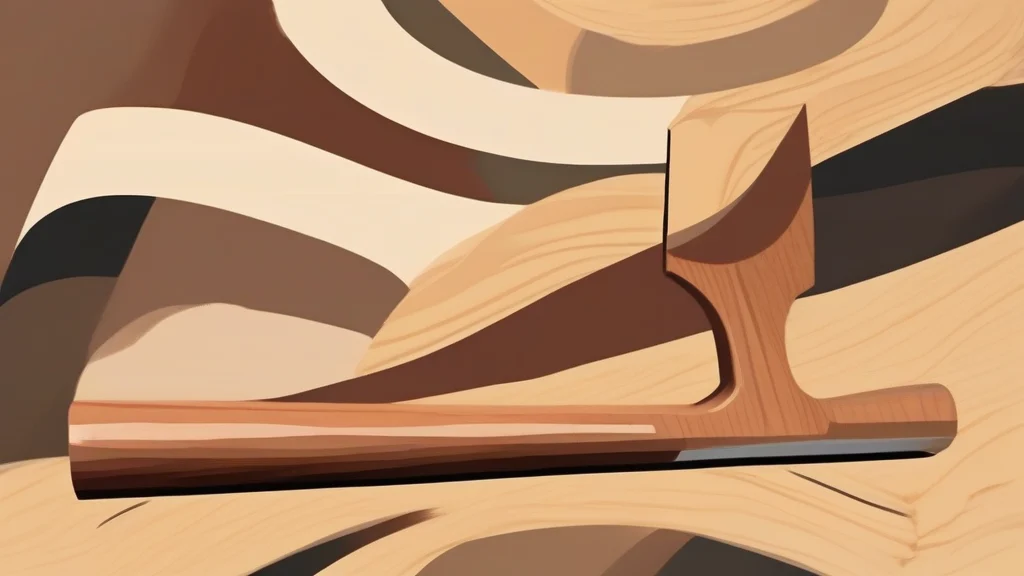
"Adzed" is the past tense and past participle of the verb "adze," meaning to shape, smooth, or dress wood with an adze — an ancient hand tool consisting of a thin, arched blade mounted at a right angle to its handle. Unlike an axe, which splits along the grain, an adze removes thin shavings across or along the grain, allowing a craftsperson to hollow out troughs, flatten beams, or curve planks with remarkable control. Wood described as "adzed" bears distinctive shallow scallops left by repeated strokes, a texture now prized in rustic furniture and timber-frame construction as a mark of authentic handwork. The word appears mainly in woodworking, boatbuilding, and architectural restoration contexts, where it signals traditional craftsmanship rather than machine precision. Though uncommon in everyday speech, it remains current wherever timber is worked by hand.
verbPast tense and past participle of the verb "adze": shaped or smoothed wood using an adze, a cutting tool with a thin arched blade set at right angles to the handle.
- Shaped or dressed wood with an adze, leaving characteristic scalloped facets on the surface.
"The carpenter adzed the oak beams by hand until their surfaces bore the soft, rippled texture of traditional craftsmanship."
"The shipwright adzed each plank to fit the curving hull of the fishing boat."
"Visitors admired the roughly adzed lintels above the doorways of the restored farmhouse."
An adze has been shaping everything from dugout canoes to cathedral roof beams for thousands of years — and "adzed" is one of the few English words whose past tense ends in three consonants in a row.
Reviewed by Deb Chak, Editor. AI-assisted content curated by RJS Tech Solutions LLP.
Etymology of adzed
The verb derives from the noun "adze," which comes from Old English "adesa," a word attested in early medieval texts and cognate with related forms in other Germanic languages. The tool itself is far older than the word's written record, having been used since prehistoric times across many cultures for hollowing timber. The derived verb form "adzed" follows standard English inflection of nouns-turned-verbs.
Related word forms
How adzed is actually used
Almost exclusively used in woodworking, heritage building, and furniture-making contexts. The form "adzed" typically appears attributively ("an adzed finish") as often as verbally.
Easily confused with adzed
"Axed" means cut or removed with an axe (or figuratively cancelled), while "adzed" specifically refers to shaping wood with an adze, a tool whose blade is perpendicular to the handle.