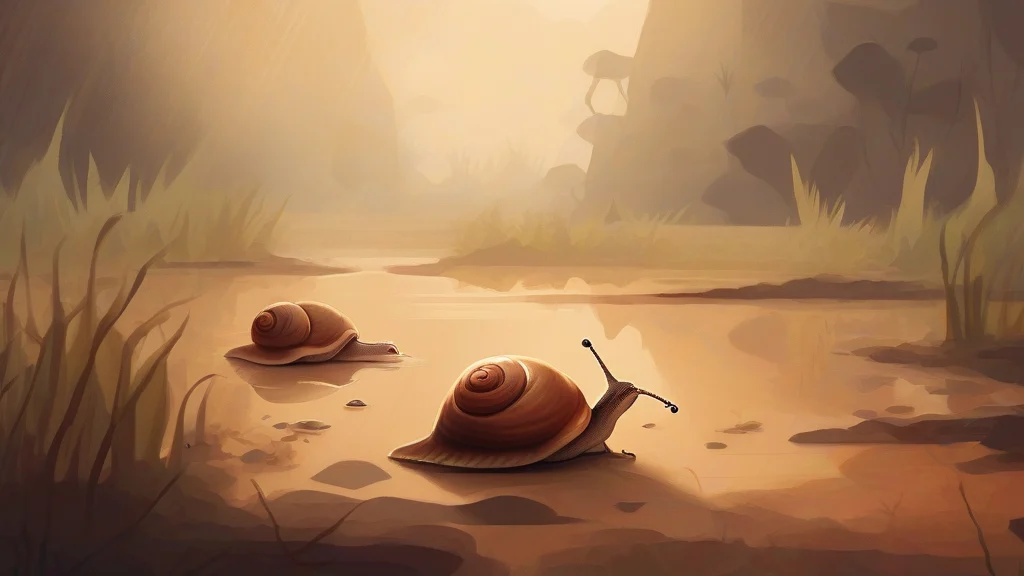
What does aestivate mean?
To aestivate is to pass the summer in a state of dormancy or torpor, a survival strategy used by certain animals — including snails, some amphibians, and the African lungfish — to endure extreme heat and drought. Just as hibernation allows creatures to wait out the cold of winter, aestivation lets them shut down their metabolism through the hottest, driest months, often sealed inside shells, burrows, or dried mud until conditions improve. The word derives from the Latin aestas, meaning summer, and shares its root with 'estival', relating to summer. In British English the spelling is 'aestivate'; American English generally prefers 'estivate'. Though primarily a scientific term found in zoology and ecology, it retains an older, more literary sense of simply spending the summer, as in holidaying somewhere cool. Its precise, evocative quality makes it a favourite among lovers of unusual vocabulary.
verbTo spend the summer in a dormant or torpid state, as certain animals such as snails, lungfish, and some amphibians do to survive heat and drought. More broadly, to pass the summer.
- (of animals) To pass the summer in a dormant, torpid state to survive heat or drought.
- (chiefly British) To spend or pass the summer.
"Desert snails aestivate sealed inside their shells for months until the rains return."
"When its pond dries up, the African lungfish burrows into the mud and aestivates until the water returns."
"The family traditionally aestivated at their coastal cottage through July and August."
Some animals sleep through summer instead of winter — lungfish can encase themselves in mud and aestivate for years, waiting for rain.
Reviewed by Deb Chak, Editor. AI-assisted content curated by RJS Tech Solutions LLP.
Etymology of aestivate
Aestivate comes from the Latin verb aestivare, formed from aestas, meaning 'summer'. The word entered English in the early 17th century, initially carrying the general sense of passing the summer, before acquiring its specialized zoological meaning of summer dormancy. It shares its root with 'estival' and 'aestival' (relating to summer) and is distantly connected to 'estuary', which traces back to the related Latin aestus, denoting heat or tide.
Related word forms
How aestivate is actually used
The spelling 'aestivate' is standard in British English, while American English typically uses 'estivate'. The term is primarily technical, used in zoology and ecology, though it carries an older, more literary sense of simply passing the summer. It is formal rather than conversational vocabulary.
Easily confused with aestivate
Hibernation is winter dormancy to survive cold, while aestivation is summer dormancy to survive heat and drought.
Estivate is simply the American spelling of the same word; aestivate is the chiefly British form.