What does agorae mean?
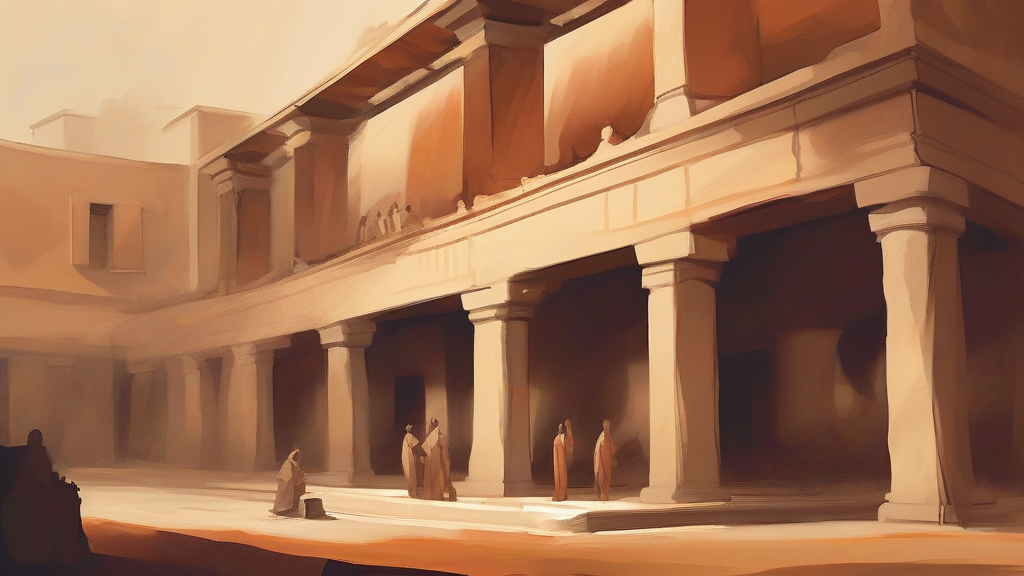
Agorae is the plural of 'agora', the word for the open public squares that stood at the heart of every ancient Greek city. Far more than simple markets, agorae were the stages on which civic life unfolded: citizens gathered there to trade goods, debate politics, administer justice, attend religious ceremonies, and exchange ideas. The most famous example, the Athenian Agora, hosted philosophers such as Socrates and served as the political and commercial nucleus of the world's first democracy. In modern usage, 'agorae' appears mainly in academic and archaeological contexts, where scholars compare the layouts and functions of these spaces across different city-states. The word carries strong connotations of classical antiquity, public life, and democratic origins. A related modern echo is 'agoraphobia', literally the fear of the marketplace or open public space, which preserves the same Greek root.
nounAgorae is the plural of 'agora', referring to the open public marketplaces and gathering spaces that served as the civic, commercial, and social centers of ancient Greek cities.
- The plural form of 'agora': the open public squares that served as marketplaces and civic centers in ancient Greek cities.
"The archaeologists mapped the agorae of several ancient Ionian cities to compare their civic layouts."
"Excavations across the Aegean have revealed how differently each city arranged its agorae."
"In classical Athens, the agora functioned as marketplace, courtroom, and forum for public debate all at once."
Both 'agorae' and 'agoras' are accepted plurals of 'agora'; 'agorae' reflects the Latinate scholarly tradition, while 'agoras' follows modern English pluralization.
"Visitors can walk through the excavated agorae of several ancient cities along the Ionian coast."
Every ancient Greek city had one — a single open square where you could buy fish, hear a philosopher, catch up on politics, and stand trial, all before lunch.
Reviewed by Deb Chak, Editor. AI-assisted content curated by RJS Tech Solutions LLP.
Etymology of agorae
The word derives from the ancient Greek 'agora' (ἀγορά), meaning 'assembly' or 'marketplace', from 'ageirein', 'to gather together'. The plural form 'agorae' entered English through Latinized scholarship on classical antiquity, following the Latin convention of rendering Greek plurals with '-ae' endings. The same Greek root survives in 'agoraphobia', coined in the 19th century from 'agora' plus 'phobos' (fear).
Related word forms
How agorae is actually used
Agorae is used almost exclusively in scholarly, archaeological, or historical writing about the ancient Greek world. It is a learned plural retained from Latinized forms of the Greek; in general prose, writers often simply use 'agoras' as the plural instead.
Easily confused with agorae
'Agora' is the singular term for one such marketplace, while 'agorae' is its standard English plural form referring to multiple such spaces.
A forum is the equivalent public square in ancient Roman cities, whereas an agora (plural agorae) is specifically the Greek counterpart.