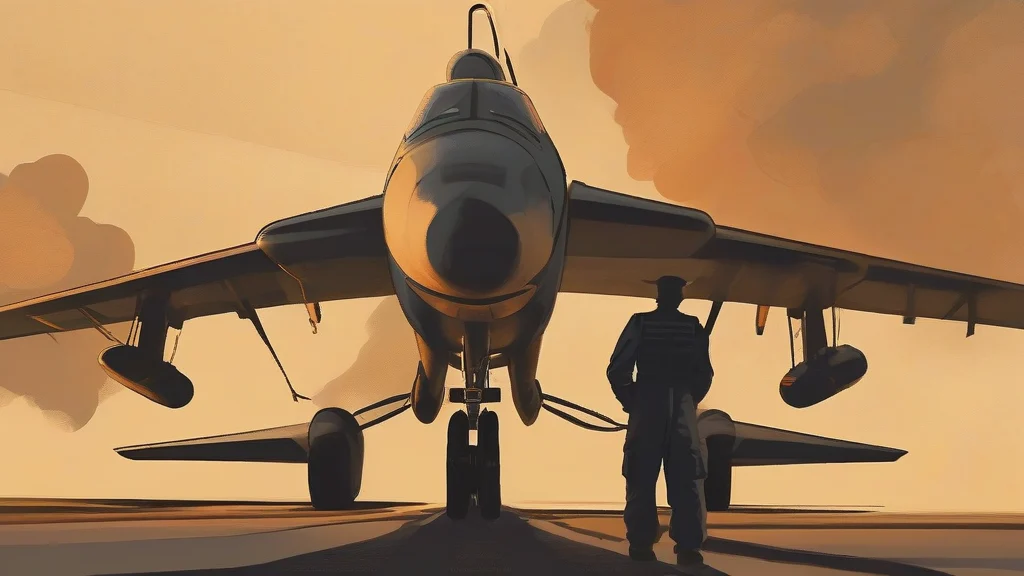
What does airman mean?
An airman is a member of an air force, most precisely an enlisted service member ranking below commissioned officers, though the term is also used more broadly for anyone who flies or works with aircraft. In the United States Air Force, 'airman' names both a specific set of junior enlisted ranks — from Airman Basic through Senior Airman — and the entire enlisted corps collectively, making it one of the most frequently used words in that service's vocabulary. In British and Commonwealth usage, the equivalent term covers non-commissioned members of the Royal Air Force. Historically the word was strongly associated with men, and the parallel form 'airwoman' was coined for women; today the term is generally understood as gender-neutral in practice. The word evokes discipline, technical skill, and the traditions of military aviation, and it remains a useful, respectful way to refer to those who serve in the air rather than on land or sea.
nounA person who serves as an enlisted member of an air force, especially one below the rank of officer; more broadly, a man who operates or works with aircraft.
- An enlisted member of an air force, below commissioned-officer rank (the dominant modern sense, especially in military usage).
- More broadly, any person — historically typically a man — who flies, operates, or works with aircraft.
"After completing basic training, he was promoted to senior airman."
"The decorated airman received the medal for his service during the campaign."
"As a young airman in the Royal Air Force, she maintained navigation systems on transport aircraft."
The plural follows the irregular 'men' pattern of its second element, like 'seamen' and 'firemen'.
"Hundreds of airmen marched in the parade."
In the U.S. Air Force, 'Airman' isn't just a job title — it's the lowest enlisted rank, and every recruit earns it within weeks of basic training.
Reviewed by Deb Chak, Editor. AI-assisted content curated by RJS Tech Solutions LLP.
Etymology of airman
The word 'airman' is a straightforward English compound of 'air' and 'man', formed in the early twentieth century when powered flight created a new class of servicemen and aviators. It emerged alongside related terms such as 'airwoman' and 'airmanship', all built on the same pattern as older compounds like 'seaman' and 'fireman'. Its adoption accelerated with the founding of independent air forces — notably the Royal Air Force in 1918 and the United States Air Force in 1947 — which gave the word an official, rank-based meaning. Cognate formations using the same root include 'aircraft', 'aerial', and 'aeronautics'.
Related word forms
How airman is actually used
In United States Air Force usage, 'airman' has a precise technical meaning: it denotes enlisted personnel in pay grades E-1 through E-4 (Airman Basic, Airman, Airman First Class, Senior Airman), and is also used generically to refer to any enlisted member of the force. In British and general usage the word is broader and somewhat older-fashioned, often applied to anyone serving in an air force. The gender-neutral term 'airwoman' exists, and modern usage increasingly treats the role without gender distinction. The word carries connotations of service, discipline, and aviation tradition.
Easily confused with airman
An airplane is the aircraft itself, while an airman is a person who serves in or works with aircraft.
A sailor serves in a navy aboard ships, whereas an airman serves in an air force.