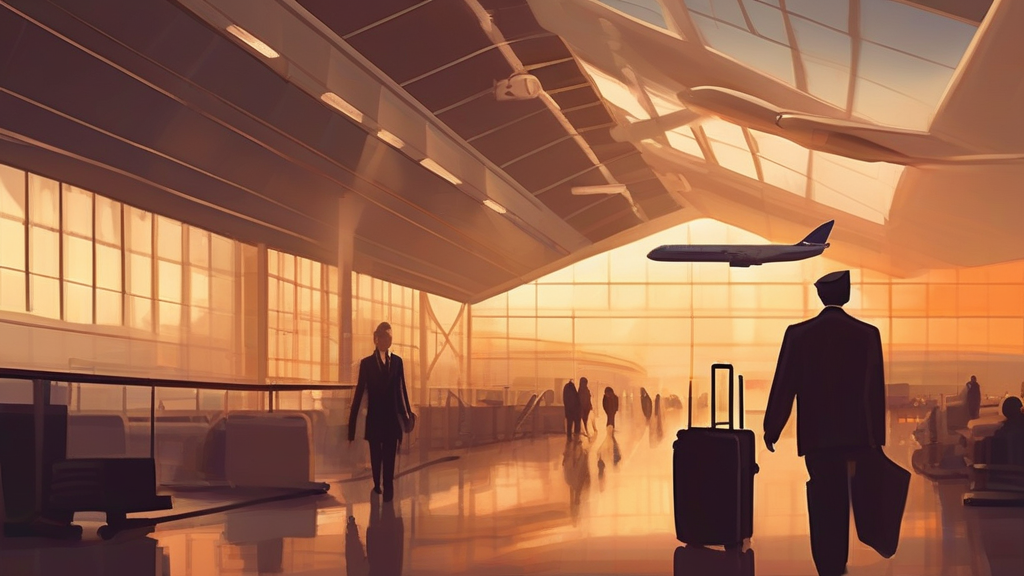
What does airside mean?
Airside refers to the secure, restricted portion of an airport that lies beyond security screening and passport control. It includes the departure gates, lounges, jet bridges, aprons, taxiways, and runways — essentially everything on the 'aircraft' side of the terminal. Access is limited to passengers holding valid boarding passes who have passed through screening, and to staff carrying special airside passes. Its counterpart is 'landside', the public area of check-in halls, baggage claim, and shops open to anyone. The term is standard vocabulary in aviation, used by airlines, airport operators, regulators, and travel journalists alike, and it appears frequently in discussions of airport layout, passenger flow, and security procedures. For travelers, crossing from landside to airside is the symbolic moment of beginning a journey — once through, re-entry to the public side typically requires exiting security entirely. Though technical in origin, the word has become familiar enough that it appears regularly in everyday travel writing and announcements.
nounThe part of an airport beyond security screening and passport control, encompassing the runways, taxiways, aprons, and aircraft stands — the zone accessible only to passengers who have been screened and to authorized staff.
- The secure area of an airport beyond security screening and passport control, containing gates, lounges, runways, and aircraft stands.
"Once she cleared passport control, she was officially airside and could relax at the departure lounge."
"Passengers transferring between terminals must remain airside to avoid clearing security twice."
"Only staff with a valid airside pass are permitted onto the apron where aircraft are parked."
Rarely pluralized; the term almost always appears in the singular since each airport has a single continuous airside zone.
"The consultant compared the airside layouts of several major hubs."
The word 'airside' marks the invisible line every traveler crosses at security — one side you can leave freely, the other side requires a boarding pass to even enter.
Reviewed by Deb Chak, Editor. AI-assisted content curated by RJS Tech Solutions LLP.
Etymology of airside
Airside is a modern compound formed from 'air' and 'side', following the pattern of older location compounds like 'seaside' and 'riverside'. It emerged in twentieth-century aviation English as airports grew complex enough to require a formal distinction between public and secure zones. The word belongs to a family of '-side' compounds that divide spaces into functional halves, and it developed alongside its natural opposite, 'landside', as international air travel made security zoning a universal feature of airport design.
How airside is actually used
Primarily used in aviation industry contexts — by airlines, airports, travel writers, and frequent flyers. The word carries no strong connotation but implies restricted access; it is standard terminology in both British and American aviation discourse.
Easily confused with airside
Landside is the opposite of airside — the publicly accessible part of an airport before security screening, such as check-in halls and arrivals areas.
Airspace is the portion of the sky controlled by a country or authority for aviation purposes, whereas airside is a physical ground area within an airport.