What does alabaster mean?
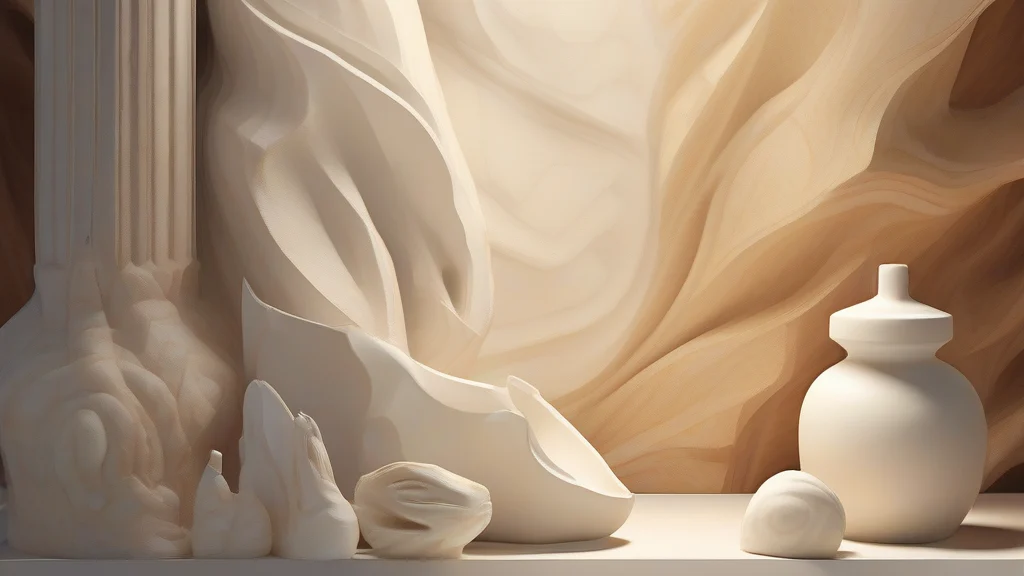
Alabaster is a soft, fine-grained, often translucent stone — a variety of gypsum — that has been treasured since antiquity for carving vases, statues, reliefs, and ornamental objects. Usually white or gently tinted with cream, pink, or amber veining, it allows light to pass through in a warm glow, which made it especially valued for lamps and window panes in medieval churches. Because it is remarkably soft, alabaster is easy to carve but easily scratched, so finished pieces are treated with care. Beyond its geological meaning, the word is widely used figuratively to describe skin or surfaces of flawless, luminous paleness, lending writing an air of elegance, purity, or cool detachment. The word entered English through Latin and Greek from an ancient Egyptian origin, reflecting the stone's long association with the vessels known as alabastra. Today it appears in art history, interior design, and descriptive literature alike.
A compact, translucent variety of gypsum, typically white or lightly coloured, used for carving decorative objects and sculpture.
"The sculptor selected a block of pure white alabaster for the memorial relief."
In American mineralogy, 'alabaster' may denote a banded calcite rather than gypsum; the British convention treats it strictly as a gypsum variety.
(Figurative) A smooth, pale, white surface, especially of human skin, likened to the stone.
"His face was as calm and unlined as alabaster."
Often used attributively ('an alabaster brow') or predicatively in literary prose; can suggest coldness or lack of vitality as well as beauty.
The plural refers to multiple individual pieces or objects made of the stone, not to the substance itself.
"The gift shop sold small alabasters carved into animal figures."
Alabaster is so soft you can scratch it with your fingernail — yet it has been prized for sculpture for over five thousand years.
Reviewed by Deb Chak, Editor. AI-assisted content curated by RJS Tech Solutions LLP.
Etymology of alabaster
The word 'alabaster' derives from Latin 'alabaster', borrowed from Greek 'alabastros' or 'alabaston', the name of a perfume vessel carved from the stone. The Greek term itself likely originated in ancient Egyptian, possibly connected to the town of Alabastron, a centre of gypsum quarrying. The word has been used in English since the Middle Ages, and its adjective form 'alabaster' describing pale whiteness developed from the noun's association with the stone's colour.
Related word forms
How alabaster is actually used
Used both as a material term in art, archaeology, and geology, and figuratively in literary description of pale beauty. The figurative sense carries connotations of delicacy, purity, and sometimes coldness or lifelessness. In American usage, 'alabaster' sometimes refers to a calcite variety rather than gypsum; British usage traditionally reserves it for the gypsum form.
Easily confused with alabaster
Marble is a hard, crystalline limestone that polishes to a high gloss, whereas alabaster is a much softer, translucent gypsum that can be scratched with a fingernail.