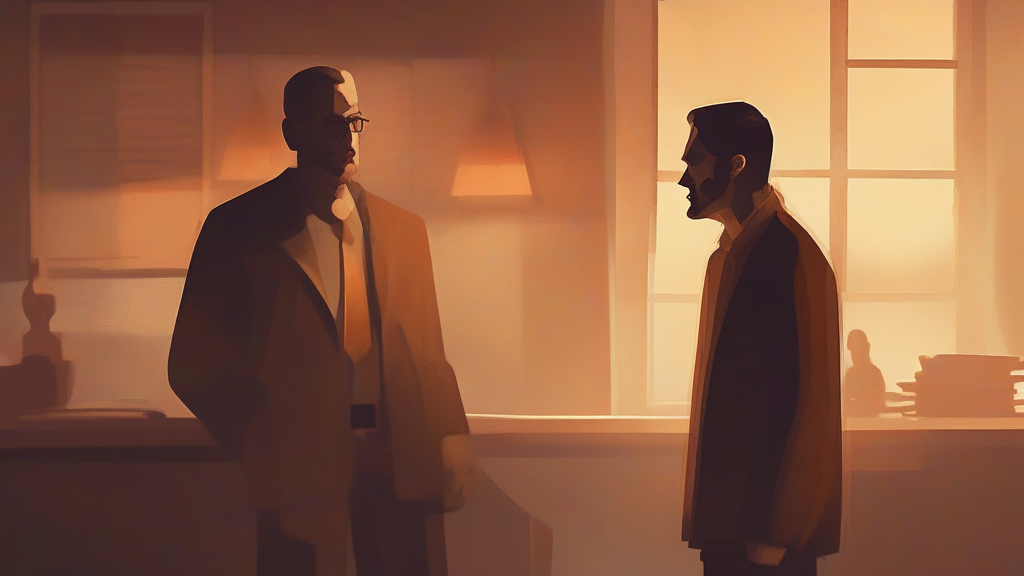
What does altercated mean?
'Altercated' is the past tense of the rare verb 'altercate', meaning to have engaged in a heated, noisy dispute with someone. To altercate is not merely to disagree — it implies an animated, often loud exchange of angry words, sitting somewhere between a formal debate and an outright quarrel. The word derives from Latin 'altercari', meaning to wrangle or dispute, and entered English usage around the early seventeenth century alongside its more familiar sibling noun, 'altercation'. While 'altercation' remains reasonably well known as a term for a noisy argument, the verb 'altercate' — and by extension its past form 'altercated' — has fallen into disuse and now appears mainly in literary, historical, or deliberately ornate prose. Readers encountering it should understand it as a colourful, emphatic way of saying that two parties quarrelled openly, though in modern writing 'argued' or 'quarrelled' would be the natural choices.
verb (past tense and past participle of 'altercate')Past tense of 'altercate': to have engaged in a heated or noisy dispute or argument with someone.
- To have engaged in a loud, heated dispute or quarrel with another person (past tense of 'altercate').
"The two senators altercated for nearly an hour before the committee adjourned."
"The merchants altercated loudly over the price of grain in the market square."
"Having altercated bitterly during the meeting, the board members left without reaching consensus."
If you've ever shouted across a table at someone, congratulations — you've altercated, using a word so rare that most dictionaries barely acknowledge it exists.
Reviewed by Deb Chak, Editor. AI-assisted content curated by RJS Tech Solutions LLP.
Etymology of altercated
'Altercated' comes from the Latin verb 'altercari', meaning to dispute or wrangle, formed from 'alter' ('other'), reflecting the back-and-forth nature of an argument between two parties. The English verb 'altercate' was adopted in the early seventeenth century, together with the noun 'altercation'. Its closest relatives in modern English are 'altercation' and 'altercative'; the everyday sense of heated dispute is today carried almost entirely by the noun rather than the verb.
Related word forms
How altercated is actually used
'Altercate' and its past form 'altercated' are rare, somewhat archaic words found mainly in formal or literary contexts. In everyday speech, people simply say they argued or quarrelled. The noun 'altercation' is far more common than the verb.
Easily confused with altercated
'Altered' means changed or modified, whereas 'altercated' means having engaged in a heated argument.