What does amarant mean?
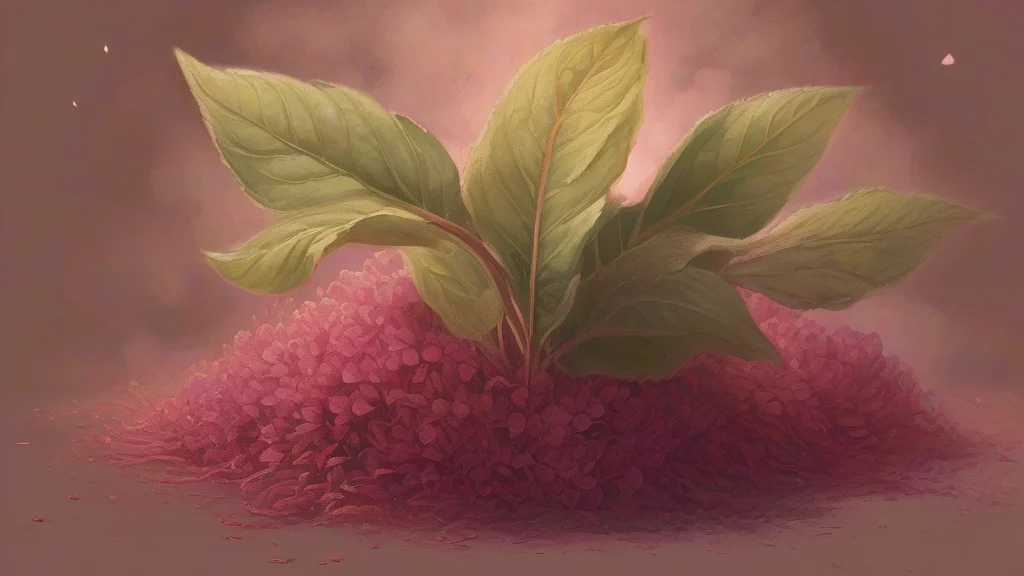
Amarant is an archaic English form of the word more familiar today as "amaranth." As a noun, it denotes either a flower — originally a legendary bloom believed never to fade, later identified with real plants of the genus Amaranthus, whose dense, showy flower heads retain their colour long after cutting — or, by extension, the deep purplish-red colour associated with those blooms. The name descends from the Greek "amarantos," meaning "unfading" or "undying," which made the flower a natural emblem of immortality and enduring love in classical and Renaissance verse. In modern usage "amarant" survives mainly in poetry, historical botany, and decorative arts contexts, while "amaranth" has become the standard term for both the plant and the colour. Knowing "amarant" is useful chiefly for reading older literature fluently and for appreciating the rich symbolic history behind a flower whose very name promised eternity.
An unfading flower, real or legendary; specifically a plant of the genus Amaranthus with long-lasting, showy blooms.
"The gardener grew amarant along the wall, its crimson plumes undimmed by frost."
Now largely superseded by "amaranth"; chiefly found in older or poetic texts.
A deep purplish-red colour resembling that of the amaranth flower.
"Her gown was dyed a deep amarant that caught the candlelight like old velvet."
As a countable noun referring to plants or flowers, "amarant" takes the regular plural "amarants."
"Bunches of dried amarants still held their colour months after harvest."
The Greeks named this flower "amarantos" — literally "the unwithering one" — because legend said it never fades.
Reviewed by Deb Chak, Editor. AI-assisted content curated by RJS Tech Solutions LLP.
Etymology of amarant
Amarant comes from the Greek "amarantos" (ἀμάραντος), meaning "unfading" or "unwithering," formed from the negative prefix "a-" plus a verb relating to withering or quenching. The word passed into Latin as "amarantus" and entered English in the sixteenth century, initially in the forms "amarant" and "amaranth," both applied to the fabled unfading flower and then to plants of the genus Amaranthus. Over time "amaranth" became the standard English form, leaving "amarant" as a chiefly historical and poetic variant.
Related word forms
How amarant is actually used
"Amarant" is chiefly historical, poetic, or botanical-register vocabulary; in modern writing "amaranth" is strongly preferred for both senses. When encountered, it typically appears in older texts, poetry, or deliberate archaism.
Easily confused with amarant
"Amarant" is simply an older, now largely obsolete spelling and pronunciation of "amaranth," which is the standard modern form for both the plant and the colour.