What does amia mean?
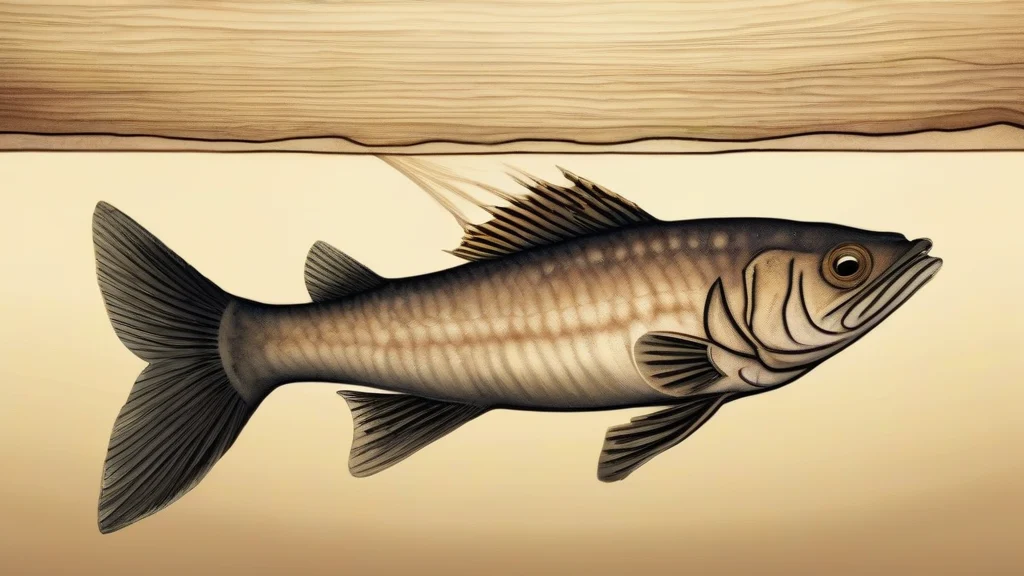
Amia is the scientific genus name for one of the most remarkable survivors in the fish world: the bowfin, Amia calva, a stout-bodied freshwater predator found in slow-moving rivers, swamps, and backwaters of eastern North America. It is the only living member of its family, Amiidae, making it what biologists call a relict — a lone representative of a lineage that flourished alongside the dinosaurs. What sets the amia apart is its ability to gulp air at the surface and absorb oxygen through its vascularized swim bladder, allowing it to endure warm, stagnant waters that would kill most fish. Anglers often know it by other names such as mudfish, grindle, or dogfish, and it is sometimes caught accidentally while fishing for bass. Though considered a rough fish by some, it plays an important ecological role as both predator and scavenger, and it remains a subject of ongoing scientific interest for what it reveals about vertebrate evolution.
nounA genus of primitive freshwater ray-finned fishes native to North America, comprising the single living species Amia calva, commonly known as the bowfin.
- The genus Amia of primitive freshwater fishes, whose sole surviving species is the bowfin (Amia calva) of eastern North America.
"The angler pulled a hefty amia from the weedy shallows of the Mississippi backwater."
"Biologists prize the amia as a living link to ancient lineages of ray-finned fishes."
"In the murky oxbow lakes of Louisiana, the amia thrives where oxygen-poor water would suffocate most other fish."
As a taxonomic genus name, Amia is typically treated as singular when referring to the genus itself; when referring to individual fish, the regular English plural "amias" may be used informally.
"Several amias were netted during the wetland survey."
The amia, or bowfin, can breathe air with its swim bladder — a trick that has kept it alive virtually unchanged since the age of the dinosaurs.
Reviewed by Deb Chak, Editor. AI-assisted content curated by RJS Tech Solutions LLP.
Etymology of amia
The genus name Amia derives from Greek, in which "amia" was the name applied to a kind of fish. The naturalist Constantine Samuel Rafinesque established the modern usage when he described the North American bowfin in the early nineteenth century, retaining the classical Greek name for the genus. As a Linnaean binomial, Amia calva pairs this ancient Greek generic name with a specific epithet meaning "bald" or "scaleless," referring to the fish's smooth head.
How amia is actually used
Primarily used in scientific, ichthyological, and natural-history contexts; in everyday speech anglers are far more likely to use the common names "bowfin," "mudfish," or "grindle." The plural in scientific writing follows Latin convention (amias or Amia species).
Easily confused with amia
"Ami" is a French word meaning friend (also a term in solitaire and fencing), whereas "amia" refers to a genus of North American freshwater fish.