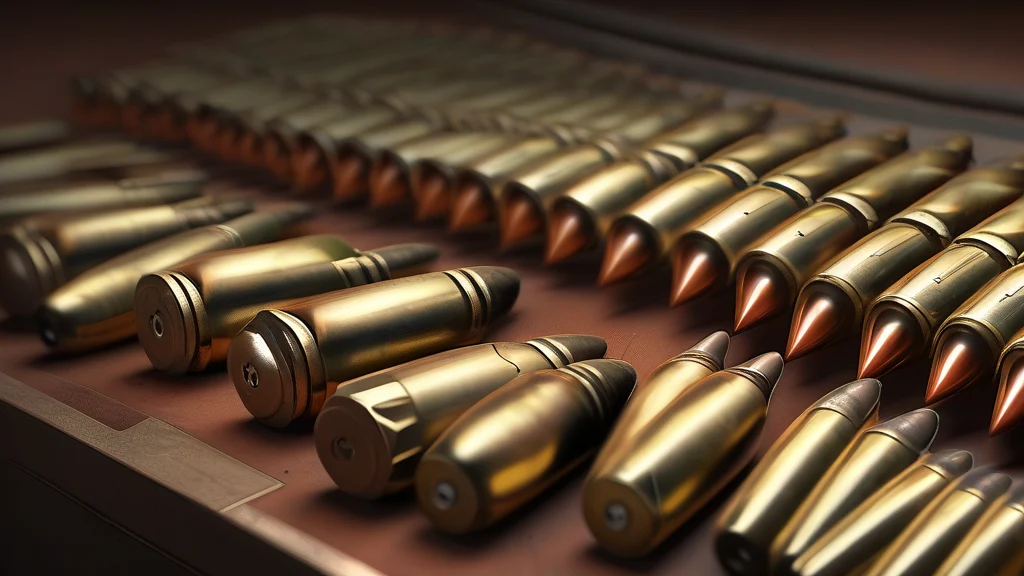
What does ammunition mean?
Ammunition is the collective term for the projectiles, propellants, explosives, and associated components fired from weapons such as rifles, pistols, artillery pieces, and machine guns. In strict military usage it covers everything from bullets and cartridges to shells, grenades, and fuses — the consumable material of armed conflict, as distinct from the weapons themselves. Beyond the battlefield, the word has taken on a widely used figurative meaning: facts, evidence, or arguments that can be deployed against an opponent, as in 'the scandal gave his rivals plenty of ammunition.' This metaphorical sense is especially frequent in politics and journalism, where information is described as ammunition in a debate. The noun is grammatically uncountable in ordinary use, with no plural form, though speakers often speak of 'rounds' of ammunition when counting individual units. Derived through French from Latin roots relating to provision and supply, the word's very spelling preserves a historical corruption, making it a small linguistic curiosity as well as a term of practical importance.
nounA supply or quantity of bullets, shells, explosives, and other projectiles fired from weapons; more broadly, any material used in attacking or defending a position. Figuratively, it refers to facts or arguments that can be used to support a cause or attack an opponent.
- Projectiles (bullets, shells, etc.) together with their propellants and fuses, fired from guns, cannons, or other weapons.
- Figurative use: facts, arguments, or information used to attack an opponent or defend a position in debate or controversy.
"The soldiers carried enough ammunition to last through the night."
"Troops at the outpost radioed headquarters requesting fresh ammunition before dawn."
"Her leaked emails gave the opposition all the ammunition they needed for the campaign."
Ammunition is a mass noun with no plural form; quantities are expressed as 'rounds of ammunition' or simply 'more ammunition'.
"They stockpiled thousands of rounds of ammunition ahead of the exercise."
The word 'ammunition' comes from French 'la munition' — and for centuries English speakers mangled it so badly that the corrupted spelling became the standard word we use today.
Reviewed by Deb Chak, Editor. AI-assisted content curated by RJS Tech Solutions LLP.
Etymology of ammunition
Ammunition entered English in the early seventeenth century from French, where munition (from Latin 'munitio', meaning fortification or provisioning) denoted military supplies. Early English usage produced a corrupted form — influenced by words beginning with 'am-' — which became fixed as the standard spelling. It is thus etymologically a sibling of 'munition', the broader term for war materiel, both descending ultimately from the Latin verb 'munire', to fortify or equip.
How ammunition is actually used
In military contexts the term is technical and precise; in everyday speech it is most often used figuratively to mean rhetorical or evidential 'fuel' against someone. The figurative sense is common in political journalism. Ammunition is treated as a mass noun — it has no plural form in ordinary use, though 'rounds of ammunition' is common when counting individual units.
Easily confused with ammunition
Munitions is the broader term covering all military supplies and weapons materiel, while ammunition refers specifically to the projectiles and propellants fired from weapons.